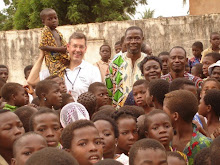
“Ti melèt!” Child-thieves! The angry mobs were screaming at us in Creole. I didn’t learn what that meant until the careening, heart-stopping ride was over at the mountain-top Haitian police station. I knew only that we were all in grave danger – three small children from our orphanage and us three adults.
As founder of Orphans International Worldwide, the U.N.-recognized network of orphanages around the globe, I am used to travelling to Indonesia, Sri Lanka, Togo, and Peru, overseeing operations globally. This was my 16th trip to Haiti, visiting our project in Gonaives. With me were OI Haiti director Jacques Africot, and Dr. Doris Chernik of New York, a psychologist and our educational advisor.
With a new government in place, Haiti was doing better than we had ever experienced. Local friends had assured us that the political and economic violence was over. Our kids were never at the smallest risk from that violence—which was directed only at people of means. For the first time, as Americans, we felt safe in Haiti. Of course, like firefighters, we understood that international development workers can find themselves in harm’s way in a flash.
The day before our departure back to New York, we had a half-day free and took our three youngest kids, Patrick—who is four, and Walter and Jean Kerby—both five, wading in the fresh river twenty minutes up the road from our home. Leaving hot, dusty Gonaives, we welcomed the cool green of the mountainous countryside. We splashed around in the cold waters. Then, fuel tank almost empty, we drove a few miles further up the road for gas, planning to head back to the orphanage for dinner.
Kids don’t like waiting in the back seat in 94º heat when the engine is turned off to get gas, so gripping tiny hands, I took the children to explore the large parking lot. We passed a busy restaurant with many motorcycles outside. What an active space it was - seemingly the village’s social center.
Much of today’s Haitian population was brought as slaves by the French from what is now Benin, Togo, and Ghana to the island of Hispaniola, which Haiti shares with the Dominican Republic. Haiti became the first independent slave state, freed by the slaves themselves. Since then, Haiti has been betrayed by her own leaders as much as by slave owners. Today, Haiti is the poorest nation in the Americas.
Our children in Haiti all come from the Gonaives area, four hours west of Port-au-Prince. They were raised by their parents in an unimaginable poverty, most of them not even attending school. In 2004, Hurricane Jeanne washed much of Gonaives into the sea, including the parents of our children.
Today, eleven children live with us at OI Haiti. We have already opened our pre-school, and we are building a community health center, an elementary school, and an Internet-connected computer center. As we raise additional funds, we will take in more children.
Returning from our tour of the parking lot, we sat on the shaded curb to wait for the jeep to be serviced. The locals started to gather around us, curious to see these beautiful children who were smiling and happily clapping their hands together. Then the villagers began to question our kids. Their mood shifted. Suddenly they seemed less friendly. Our kids stopped smiling and fidgeted nervously. A man stomped over to me and loudly, very angrily and with eyes bulging and nostrils flaring, began to scream at me in Creole. I can get by in five languages, but not Creole, which is to say I had no idea what he was saying, only that he was enraged.
I called out to Jacques that we had a large problem not knowing yet what it was. Doris was still in the passenger seat. I helped the three boys climb into the backseat. The people who had been sitting on the curb began to screech in Creole at our Haitian director, Jacques, who had just closed the hood and was getting back into the hot, steamy jeep. Jacques continued to explain to the crowd in Creole that he was the project director of an orphanage helping Haiti’s children, but the angry mob refused to believe it. They dismissed him as merely a driver for the rich whites, “Blanc,” as they called us. The growing crowd began to chant louder and louder in the local dialect, “Ti melèt!” I learned the meaning later – child-thieves.
In seconds, the mob had exploded from ten to twenty to fifty. Jacques motioned for the crowd to move and tried to drive away. The villagers, now shouting louder and banging on the car, refused to budge. In reverse, the car could not move. Our rear wheels had been blocked with boulders.
Jacques, calm and in control, shouted that he was going on foot for the police. Where?! The police presence in the Haitian countryside is sparse. Violence is centered in the cities, and a strong police presence outside the cities has never been necessary. The crowd was screaming louder and louder and strong hands soon reached into the car to pull out our children. I kept trying to lock the back doors, but every time the driver’s door opened, they all automatically unlocked.
Suddenly little Jean Kerby was screaming, high pitched and frantic, as the crowd began to yank him from our car. I held on to his feet and, as the adrenaline kicked in, pulled him back, winning this human tug of war. Calm but determined in the front seat, Doris was pulling Patrick back from the angry crowd as well.
A man forced his way into the car next to me. In English, the stranger shouted over the crowd’s roar that he would help us get to the police station. He got out of the car and tried to scream over the crowd, now numbering, I believe, over one hundred. No one listened to him. Many were arming themselves with stones and cement blocks.
The back door again opened and Jacques jumped in. A gigantic policeman clamored into the front seat. Jacques had found him together with his brother, in the restaurant, and explained that “white people” were about to be hurt. This local police officer rushed to our aid. The crowd was pounding on the car but recognized him, this local authority, and slowed their violence. He drove the car forward thirty feet. The crowd parted, then surrounded us again. A man was about to heave a cement block through our front window and another one raised a block to our left side. The policeman jumped out and screamed he was taking us to the local police station. Once more, they backed off a bit.
He clambered back in, backed up the jeep violently, and we were on our way. He later estimated that two hundred people—ten percent of the entire village—had surrounded us. In haste, he drove a mile down the road and then stopped. He now seemed as frightened as we were, but he needed to get some facts. Our kids were in a state of shock. Doris and I could feel their hearts pounding wildly. A thought charged through my head: I have never in my life been in more danger. Would I ever embrace my son Mathew again? Would these three kids be the last children I would ever hug?
As soon as we stopped, new people began to gather around us. I was worried, but the big policeman in the driver’s seat ignored them. Doris and Jacques kept explaining who we were, and the policeman seemed satisfied. We now understood for the first time the angry crowd thought we were kidnapping their children for the international black market.
Again, cinder blocks were raised and were about to be thrown through our windows. For the first time, the policeman pulled out his gun and aimed it squarely at the lead block-thrower’s chest and with his booming voice screamed something, perhaps “Back the Hell off or you die!” It worked. We began our desperate race against Death.
Flooring the SUV down the pot-hole pitted road, the officer quickly came to the village square where a sleepy police station sat on the side. Dozens of people on foot were chasing us. This must be a Hollywood movie I thought, not our own reality. Typical of Haiti, there was no one in the police station, so we could not stop. Like a beast that kept coming back to life, the crowd was literally right behind us, and growing ever larger again.
Tires squealing, gravel flying, the policeman raced our jeep around the village square. He clutched a pistol, a steering wheel, and a gear shift simultaneously in his hands. He looked panicked, but was shouting out the window to friends on their porches to use their cell phones to call for reinforcements—NOW! He then made the critical decision to head up the mountain, on a narrow, zigzagged road, to the next police station fourteen miles away, up in the village of Marmalade.
Our reinforcement was waiting at the foot of the mountain road, the police officer’s civilian brother riding the officer’s police motorcycle, and now serving as our escort. Up the hill we sped, ten times faster than sanity would dictate, bouncing off the huge pot-holes and careening around the S-curved road.
A modern phenomenon: With an automobile we can out-race mobs, but with cellular technology, the villagers could dial their friends and family all the way up the mountain. Many groups were lying in wait to attack us. We did not know that a truck had driven up the mountain while we were circling the village square, in some vigilante equivalent of Paul Revere’s ride, shouting along the entire fourteen mountain miles that the whites were kidnapping Haiti’s children and must be stopped at all costs. Ambush! Block! Kill!
In halting English, the policeman assured us that reinforcements would come down the mountain to reach us, and we raced upward. At the first market, dozens of angry Haitians stood ready to block the road and burn our car. The policeman, continuing this action movie that was far too real, maintained his Bruce Willis image and, with his large torso hanging out of the car window, was able to point his weapon at each and every mob member who then backed away as we raced by, police motorcycle in the lead.
Jacques sat in the back seat, little Jean Kerby balanced on his lap, calling on his cell phone, trying desperately to reach the Haitian National Police, and the United Nations Police, both in Gonaives now an hour away, as well as the American Ambassador and the U.N. Peacekeepers (MINUSTA) in Port-au-Prince, six hours away. The policeman also was on his cell, speaking to friends, family, the police at the top of the mountain, and getting word out to the National Police.
As we raced by road-side market after market, we flew through the mobs, the officer’s cold metallic pistol offering our only protection. Fourteen miles was never so long. At every curve we visualized road blocks. With every bus or truck ahead, we knew that the drivers could stop and completely barricade our way. Then, our hero cop received word that the police at the top of the mountain could not help us as their only car was broken. We were on our own.
The horror of the ride is already fading from my mind, but what has not left me is the feeling of impending death, for more than an hour, probably worse than knowing your plane is going down. Despite our fears, Doris, Jacques, and I never stopped cheerfully chatting with our kids, telling them in English, French, and Creole that this really was scary – and how brave they were not to cry!
At a bend in the road a man was waiting for us with a mayonnaise bottle of gasoline. We had not managed to fill up at the gas station and were driving on empty. The small bottle of gas did the trick and our jeep and the motorcycle sped on, entering the mountain-top village. It reminded me of Machu Picchu. God help any innocent old woman crossing the street at that moment–perhaps no motorcade had ever travelled those narrow village streets faster than we did.
Suddenly, the road was blocked as we had feared. We braked to a stop. Office tables lay across the street, with construction debris piled behind them. An angry official demanded to know why the policeman was assisting the kidnappers – or something to that effect-the angry exchange was in Creole. I later learned that he was the village mayor, and the policeman had told him our lives were in severe danger and to move out of the way—NOW! The tables were moved aside and our policeman angrily drove us over the piles of debris.
Six blocks later we screeched to a stop in front of the mountain-top police station where eight policemen had gathered to protect us. But first, we needed to be processed. So, we were officially in police custody. We showed our ID and explained again the entire macabre situation to the police chief. They gave our children water and allowed us to go to the bathroom.
A new mob gathered outside the gates, including some familiar faces from the gas station far below. Soon the media arrived. Satisfied with our story, the police chief continued to call the National Police and the U.N. Police in Gonaives for reinforcements. The police chief assured us that they could protect us in their mountain-top station.
The ringleaders of the gas station riot were brought in to be questioned in front of us. Pointing at me, the two women, faces enraged, charged that the day before I had tried to kidnap the son of one of them as he was swimming. So that is how it all started. Or had they just invented the story? The police quickly determined that she only had heard that “two whites,” whom she had never seen, had tried to kidnap her child. Nor had she reported the alleged kidnapping to the police. Luckily, we had a receipt showing that we had hosted a swimming and pizza party for our children at Doris’ hotel, sixty miles away.
The police scoffed at both of the women’s story and then scolded them in Creole, apparently ridiculing how their idiocy had come very close to getting international development workers killed. The police explained that we were completely innocent, and in fact were in Haiti to help children. Three reporters had pushed their way into the police station and went outside to tell the story to the crowd, which finally began to disperse. We were kept in police custody for several hours until the crowd outside was entirely gone.
The police, however, continued to discuss the dangers of getting us back to our orphanage, down the serpentine road on which we had come. Ambush, they thought, was still possible. Perhaps not everyone had heard or believed we were innocent. Some six hours later, another police car arrived, and with police literally riding shotgun, we drove down the mountain. It was arranged that the Gonaives National Police and the U.N. Police would meet us at the bottom.
The ride back was tense but uneventful. The reinforcements met us, including French-speaking U.N. Police from Guinea and Niger. We happily provided the mountain-top police with gas money to return to their station. After dropping off our hungry and exhausted children at the orphanage, we were debriefed at the U.N. Police Headquarters. Our rented SUV was dented from angry fists, but the raised cement blocks never reached their target. We had been surprised to meet Death at the hands of a dozen angry mobs over many miles, but had managed to escape with our lives. Our team, our children, and our spirits were unscathed.
Sitting at the breakfast table the next morning in Gonaives, writing this account, I realize I have saved other people’s lives before, but this was the first time my own life had been saved. Our Bruce Willis turned out to be Florestal Olondieu, and the commander of the mountain-top police station was Fanel Blanc, with assistance from officer Jacklin Pierre. I am exploring how the United Nations, with which we are affiliated, can honor these extraordinary men who saved our lives at great risk to their own.
I am pleased this story can be told with a happy ending, but saddened that Doris and I were to be killed because of the color of our skin. The mission of Orphans International is “Raising Global Citizens,” and it is precisely these future citizens—our children—who will resist the call of the mob when they grow up. Our approach is specifically interfaith and interracial, and we will raise leaders from our kids who will move their nations beyond the narrow village concept that whoever is different —White, Asian, African— is a danger to them. The Haitians and Africans who saved us will forever serve as role models for our children.
We came to Haiti in peace, yet for the very ignorant, living in darkness, this was incomprehensible. Doris and everyone in our organization are committed to providing the light for our children around the world to push away this vast darkness. We will return soon to our project in Haiti, and we call on people of goodwill around the world to walk with us.
- Jim Luce, July 10, 2007, Gonaives, Haiti
Post ScriptI heard one week later from our Haitian director Jacques Africot that our Bruce Willis, Officer Florestal Olondieu, was dead. He, Fanel Blanc, and Jacklin Pierre – our three heroes – were called out to take on a group of gangsters holed up in house in the village. They stormed the home, but were overpowered by the gangsters. Our Bruce Willis had his gun kicked out of his hands, and then was shot to death with it. Jacklin was struck so hard in the head he remains hospitalized today. Officer Blank managed to escape with his life. The gangsters did not. The angry villagers, seeing their police force decimated, attacked the home with sticks and stones and the gangsters were killed quickly. I sit in New York, writing this, and feel an emptiness inside me. I ache for Haiti, and her children.
 The sun rises early in Haiti and by 5:30 a.m. the sounds of happy children had awakened me. A dozen children. With two doors to my room, and a window, I count twelve children peering in to catch a glimpse of the white guy who has been in their young lives for a significant part – for most over half their lives. Do I snore? Do I dream in English? These questions and more flood their tiny heads as they watch me waking up with great excitement.
 Of course they howl in laughter, as they do for almost anything I try to say or do. I admit I exaggerate my abilities to dance ad sing, but I sadly do no exaggerate my insufficiencies with their native languages. Part of me yearns to stay for six months, being tutored daily in French and Creole.