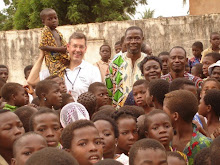
Our “Roosevelt Island for Orphans” Campaign ended significantly over our target of $10,000. “I would like to thank all of those who continued to move my dream of Raising Global Citizens towards reality,” stated OI founder Jim Luce.
Matt Katz, president of the Roosevelt Island Residents’ Association (RIRA) and Dick Lutz, editor of the Main Street WIRE, did an exceptional job as masters of ceremony, entertaining the audience with both their Island and international perspectives. Matt and Dick served as judges for the summer-long campaign.
The inspirational Juanita Fleming, Roosevelt Island’s acclaimed jazz and gospel diva, grabbed the crowd’s attention, followed by the very talented singer-songwriter Elza Mueller-Roemer. The last act was powerful, personal, and poignant: our Island’s own Nashville/soap opera talents, Damon LaScot and Kay Story. The crowd received all three acts with great enthusiasm.
U.S. Representative Carolyn Maloney was delayed in Washington, but New York State Assembly member Micah Kellner arrived from Albany, and our old and dear friend the Hon. Jessica Lappin presented an Official Proclamation from the New York City Council.
“Whereas, the Council of the City of New York is proud and pleased to join family, friends and distinguished community members in celebrating the outstanding efforts of Orphans International, and to honor Mr. Jim Luce, whose tireless efforts commitment to the lives of children around the world has been vital to countless lives, and
Whereas we are truly indebted to Orphans International, shoes contribution to the well-being of children is inestimable, we are truly fortunate to have such a dedicated organization in our City, and it is with the deepest gratitude of this legislative body that we acknowledge and applaud its outstanding efforts.”
The event raised funds for Orphans International projects around the world, specifically in Haiti, Indonesia, and Sri Lanka. The Summer Campaign was a competition between the various buildings on Roosevelt Island, and was conceptualized by OI Ambassador-at-Large Ethel Romm of Rivercross.
The total figures are not yet available as checks and credit card contributions are still pouring in, but at the moment Island House raised $510, Rivercross $577, Eastwood $1,108, and Riverwalk $2,900. The two buildings raising the most funds were Westview, in the lead from the beginning with a total of $3,300, and out of the blue, Manhattan Park with $3,300. Residents of the Octagon sadly raised nothing for the summer campaign and were booed good-naturedly by the crowd. “We challenge Octagon developer Bruce Becker, who contributed to OI’s Tsunami benefit three years ago, to make this up,” stated Jim Luce with a smile.
Marlene Flom coordinated Westview’s fundraising efforts, with a soirée over the summer in the Island’s prestigious Gallery, RIVAA, and Kimberly Andino oversaw Manhattan Park’s come-from-behind efforts. Because of the unexpected tie, both women will be invited to travel to Sri Lanka to attend the opening of OI Sri Lanka this fall and report on it for the Main Street WIRE.
The event’s surprise Silent Auction was particularly successful. Coordinated by newcomer Linda Stanley of Riverwalk, a woman of extraordinary abilities, the auction offered merchandise from elite boutiques thanks to Perrine Calvet, as well as cultural artifacts from the world travels of Jim Luce.
The most popular auction items were two $500 tickets to our own Peter Yarrow benefit to be held in his home Tuesday, October 30. Only 90 tickets exist, 20 of them already sold. Peter Yarrow is best known for his part in Peter, Paul & Mary, however his global tolerance-training project for children in conflict, Operation Respect, is a particularly close match to Orphans International. The remaining tickets to his home benefit for OI are $500, $750, and $1,000. Write info@oiww.org for an electronic invitation.
The event was sponsored by OI’s corporate sponsor, Air France, with support from Manhattan Park Management. The Roosevelt Island Operating Corporation (RIOC), and RIOC community liaison Erica Wilder supported the campaign since inception.
OI Staff played a key role in the success of the benefit. John Lee, OI Officer (Malaysia) coordinated the campaign. Interns Angelica Hagman (Sweden/U.C.S.D.), Eric Dawson (U.S./Bard), Alexis Smith-Juvelis (Venezuela/N.Y.U.), and Denise Spain (U.S./Fordham) were instrumental in its execution, along with OI NGO coordinator and publicist Margo LaZaro.
The Main Street WIRE covered the campaign from the beginning on Roosevelt Island Day in June, and many local merchants were helpful. Thanks to Nancy Rodriguez of the New York National Bank, Kaie Razhagi of Trellis Restaurant, and Cynthia Choi of Cynthia’s Nail Boutique.
Volunteers at the Sept. 15 event included a host of Island heroes: Lorrain Altman, Sharon Berman, Vicki Feinmel, Bonnie Goodman, Linda Heimer, Sheri Helstein, Arline Jacoby, Silvia Kramar, Nurit Marcus, Branko Rogic, and Nina Wintringham.
Roosevelt Islanders make up much of OI’s senior leadership as Jim Luce lives and works from Eastwood. Also, Dr. Don Hoskins of Riverwalk serves as the president of the Board of OI America, Dr. Doris Chernik of Rivercross is a member of the OI Advisory Board, Dr. Carol Hoskins of Riverwalk founded OI’s Development Committee, Dr Harriet Katz of Riverwalk chaired OI’s recent panel on global warming at the United Nations (http://www.un.org/dpi/ngosection/conference/8_Caring_After_the_Storm.htm), and Chris Godleski of Riverwalk serves as the president of OI America’s International Council.
Monday, September 17, 2007
Wednesday, August 15, 2007
Fleeing the Mob up a Haitian Mountain
“Ti melèt!” Child-thieves! The angry mobs were screaming at us in Creole. I didn’t learn what that meant until the careening, heart-stopping ride was over at the mountain-top Haitian police station. I knew only that we were all in grave danger – three small children from our orphanage and us three adults.
As founder of Orphans International Worldwide, the U.N.-recognized network of orphanages around the globe, I am used to travelling to Indonesia, Sri Lanka, Togo, and Peru, overseeing operations globally. This was my 16th trip to Haiti, visiting our project in Gonaives. With me were OI Haiti director Jacques Africot, and Dr. Doris Chernik of New York, a psychologist and our educational advisor.
With a new government in place, Haiti was doing better than we had ever experienced. Local friends had assured us that the political and economic violence was over. Our kids were never at the smallest risk from that violence—which was directed only at people of means. For the first time, as Americans, we felt safe in Haiti. Of course, like firefighters, we understood that international development workers can find themselves in harm’s way in a flash.
The day before our departure back to New York, we had a half-day free and took our three youngest kids, Patrick—who is four, and Walter and Jean Kerby—both five, wading in the fresh river twenty minutes up the road from our home. Leaving hot, dusty Gonaives, we welcomed the cool green of the mountainous countryside. We splashed around in the cold waters. Then, fuel tank almost empty, we drove a few miles further up the road for gas, planning to head back to the orphanage for dinner.
Kids don’t like waiting in the back seat in 94º heat when the engine is turned off to get gas, so gripping tiny hands, I took the children to explore the large parking lot. We passed a busy restaurant with many motorcycles outside. What an active space it was - seemingly the village’s social center.
Much of today’s Haitian population was brought as slaves by the French from what is now Benin, Togo, and Ghana to the island of Hispaniola, which Haiti shares with the Dominican Republic. Haiti became the first independent slave state, freed by the slaves themselves. Since then, Haiti has been betrayed by her own leaders as much as by slave owners. Today, Haiti is the poorest nation in the Americas.
Our children in Haiti all come from the Gonaives area, four hours west of Port-au-Prince. They were raised by their parents in an unimaginable poverty, most of them not even attending school. In 2004, Hurricane Jeanne washed much of Gonaives into the sea, including the parents of our children.
Today, eleven children live with us at OI Haiti. We have already opened our pre-school, and we are building a community health center, an elementary school, and an Internet-connected computer center. As we raise additional funds, we will take in more children.
Returning from our tour of the parking lot, we sat on the shaded curb to wait for the jeep to be serviced. The locals started to gather around us, curious to see these beautiful children who were smiling and happily clapping their hands together. Then the villagers began to question our kids. Their mood shifted. Suddenly they seemed less friendly. Our kids stopped smiling and fidgeted nervously. A man stomped over to me and loudly, very angrily and with eyes bulging and nostrils flaring, began to scream at me in Creole. I can get by in five languages, but not Creole, which is to say I had no idea what he was saying, only that he was enraged.
I called out to Jacques that we had a large problem not knowing yet what it was. Doris was still in the passenger seat. I helped the three boys climb into the backseat. The people who had been sitting on the curb began to screech in Creole at our Haitian director, Jacques, who had just closed the hood and was getting back into the hot, steamy jeep. Jacques continued to explain to the crowd in Creole that he was the project director of an orphanage helping Haiti’s children, but the angry mob refused to believe it. They dismissed him as merely a driver for the rich whites, “Blanc,” as they called us. The growing crowd began to chant louder and louder in the local dialect, “Ti melèt!” I learned the meaning later – child-thieves.
In seconds, the mob had exploded from ten to twenty to fifty. Jacques motioned for the crowd to move and tried to drive away. The villagers, now shouting louder and banging on the car, refused to budge. In reverse, the car could not move. Our rear wheels had been blocked with boulders.
Jacques, calm and in control, shouted that he was going on foot for the police. Where?! The police presence in the Haitian countryside is sparse. Violence is centered in the cities, and a strong police presence outside the cities has never been necessary. The crowd was screaming louder and louder and strong hands soon reached into the car to pull out our children. I kept trying to lock the back doors, but every time the driver’s door opened, they all automatically unlocked.
Suddenly little Jean Kerby was screaming, high pitched and frantic, as the crowd began to yank him from our car. I held on to his feet and, as the adrenaline kicked in, pulled him back, winning this human tug of war. Calm but determined in the front seat, Doris was pulling Patrick back from the angry crowd as well.
A man forced his way into the car next to me. In English, the stranger shouted over the crowd’s roar that he would help us get to the police station. He got out of the car and tried to scream over the crowd, now numbering, I believe, over one hundred. No one listened to him. Many were arming themselves with stones and cement blocks.
The back door again opened and Jacques jumped in. A gigantic policeman clamored into the front seat. Jacques had found him together with his brother, in the restaurant, and explained that “white people” were about to be hurt. This local police officer rushed to our aid. The crowd was pounding on the car but recognized him, this local authority, and slowed their violence. He drove the car forward thirty feet. The crowd parted, then surrounded us again. A man was about to heave a cement block through our front window and another one raised a block to our left side. The policeman jumped out and screamed he was taking us to the local police station. Once more, they backed off a bit.
He clambered back in, backed up the jeep violently, and we were on our way. He later estimated that two hundred people—ten percent of the entire village—had surrounded us. In haste, he drove a mile down the road and then stopped. He now seemed as frightened as we were, but he needed to get some facts. Our kids were in a state of shock. Doris and I could feel their hearts pounding wildly. A thought charged through my head: I have never in my life been in more danger. Would I ever embrace my son Mathew again? Would these three kids be the last children I would ever hug?
As soon as we stopped, new people began to gather around us. I was worried, but the big policeman in the driver’s seat ignored them. Doris and Jacques kept explaining who we were, and the policeman seemed satisfied. We now understood for the first time the angry crowd thought we were kidnapping their children for the international black market.
Again, cinder blocks were raised and were about to be thrown through our windows. For the first time, the policeman pulled out his gun and aimed it squarely at the lead block-thrower’s chest and with his booming voice screamed something, perhaps “Back the Hell off or you die!” It worked. We began our desperate race against Death.
Flooring the SUV down the pot-hole pitted road, the officer quickly came to the village square where a sleepy police station sat on the side. Dozens of people on foot were chasing us. This must be a Hollywood movie I thought, not our own reality. Typical of Haiti, there was no one in the police station, so we could not stop. Like a beast that kept coming back to life, the crowd was literally right behind us, and growing ever larger again.
Tires squealing, gravel flying, the policeman raced our jeep around the village square. He clutched a pistol, a steering wheel, and a gear shift simultaneously in his hands. He looked panicked, but was shouting out the window to friends on their porches to use their cell phones to call for reinforcements—NOW! He then made the critical decision to head up the mountain, on a narrow, zigzagged road, to the next police station fourteen miles away, up in the village of Marmalade.
Our reinforcement was waiting at the foot of the mountain road, the police officer’s civilian brother riding the officer’s police motorcycle, and now serving as our escort. Up the hill we sped, ten times faster than sanity would dictate, bouncing off the huge pot-holes and careening around the S-curved road.
A modern phenomenon: With an automobile we can out-race mobs, but with cellular technology, the villagers could dial their friends and family all the way up the mountain. Many groups were lying in wait to attack us. We did not know that a truck had driven up the mountain while we were circling the village square, in some vigilante equivalent of Paul Revere’s ride, shouting along the entire fourteen mountain miles that the whites were kidnapping Haiti’s children and must be stopped at all costs. Ambush! Block! Kill!
In halting English, the policeman assured us that reinforcements would come down the mountain to reach us, and we raced upward. At the first market, dozens of angry Haitians stood ready to block the road and burn our car. The policeman, continuing this action movie that was far too real, maintained his Bruce Willis image and, with his large torso hanging out of the car window, was able to point his weapon at each and every mob member who then backed away as we raced by, police motorcycle in the lead.
Jacques sat in the back seat, little Jean Kerby balanced on his lap, calling on his cell phone, trying desperately to reach the Haitian National Police, and the United Nations Police, both in Gonaives now an hour away, as well as the American Ambassador and the U.N. Peacekeepers (MINUSTA) in Port-au-Prince, six hours away. The policeman also was on his cell, speaking to friends, family, the police at the top of the mountain, and getting word out to the National Police.
As we raced by road-side market after market, we flew through the mobs, the officer’s cold metallic pistol offering our only protection. Fourteen miles was never so long. At every curve we visualized road blocks. With every bus or truck ahead, we knew that the drivers could stop and completely barricade our way. Then, our hero cop received word that the police at the top of the mountain could not help us as their only car was broken. We were on our own.
The horror of the ride is already fading from my mind, but what has not left me is the feeling of impending death, for more than an hour, probably worse than knowing your plane is going down. Despite our fears, Doris, Jacques, and I never stopped cheerfully chatting with our kids, telling them in English, French, and Creole that this really was scary – and how brave they were not to cry!
At a bend in the road a man was waiting for us with a mayonnaise bottle of gasoline. We had not managed to fill up at the gas station and were driving on empty. The small bottle of gas did the trick and our jeep and the motorcycle sped on, entering the mountain-top village. It reminded me of Machu Picchu. God help any innocent old woman crossing the street at that moment–perhaps no motorcade had ever travelled those narrow village streets faster than we did.
Suddenly, the road was blocked as we had feared. We braked to a stop. Office tables lay across the street, with construction debris piled behind them. An angry official demanded to know why the policeman was assisting the kidnappers – or something to that effect-the angry exchange was in Creole. I later learned that he was the village mayor, and the policeman had told him our lives were in severe danger and to move out of the way—NOW! The tables were moved aside and our policeman angrily drove us over the piles of debris.
Six blocks later we screeched to a stop in front of the mountain-top police station where eight policemen had gathered to protect us. But first, we needed to be processed. So, we were officially in police custody. We showed our ID and explained again the entire macabre situation to the police chief. They gave our children water and allowed us to go to the bathroom.
A new mob gathered outside the gates, including some familiar faces from the gas station far below. Soon the media arrived. Satisfied with our story, the police chief continued to call the National Police and the U.N. Police in Gonaives for reinforcements. The police chief assured us that they could protect us in their mountain-top station.
The ringleaders of the gas station riot were brought in to be questioned in front of us. Pointing at me, the two women, faces enraged, charged that the day before I had tried to kidnap the son of one of them as he was swimming. So that is how it all started. Or had they just invented the story? The police quickly determined that she only had heard that “two whites,” whom she had never seen, had tried to kidnap her child. Nor had she reported the alleged kidnapping to the police. Luckily, we had a receipt showing that we had hosted a swimming and pizza party for our children at Doris’ hotel, sixty miles away.
The police scoffed at both of the women’s story and then scolded them in Creole, apparently ridiculing how their idiocy had come very close to getting international development workers killed. The police explained that we were completely innocent, and in fact were in Haiti to help children. Three reporters had pushed their way into the police station and went outside to tell the story to the crowd, which finally began to disperse. We were kept in police custody for several hours until the crowd outside was entirely gone.
The police, however, continued to discuss the dangers of getting us back to our orphanage, down the serpentine road on which we had come. Ambush, they thought, was still possible. Perhaps not everyone had heard or believed we were innocent. Some six hours later, another police car arrived, and with police literally riding shotgun, we drove down the mountain. It was arranged that the Gonaives National Police and the U.N. Police would meet us at the bottom.
The ride back was tense but uneventful. The reinforcements met us, including French-speaking U.N. Police from Guinea and Niger. We happily provided the mountain-top police with gas money to return to their station. After dropping off our hungry and exhausted children at the orphanage, we were debriefed at the U.N. Police Headquarters. Our rented SUV was dented from angry fists, but the raised cement blocks never reached their target. We had been surprised to meet Death at the hands of a dozen angry mobs over many miles, but had managed to escape with our lives. Our team, our children, and our spirits were unscathed.
Sitting at the breakfast table the next morning in Gonaives, writing this account, I realize I have saved other people’s lives before, but this was the first time my own life had been saved. Our Bruce Willis turned out to be Florestal Olondieu, and the commander of the mountain-top police station was Fanel Blanc, with assistance from officer Jacklin Pierre. I am exploring how the United Nations, with which we are affiliated, can honor these extraordinary men who saved our lives at great risk to their own.
I am pleased this story can be told with a happy ending, but saddened that Doris and I were to be killed because of the color of our skin. The mission of Orphans International is “Raising Global Citizens,” and it is precisely these future citizens—our children—who will resist the call of the mob when they grow up. Our approach is specifically interfaith and interracial, and we will raise leaders from our kids who will move their nations beyond the narrow village concept that whoever is different —White, Asian, African— is a danger to them. The Haitians and Africans who saved us will forever serve as role models for our children.
We came to Haiti in peace, yet for the very ignorant, living in darkness, this was incomprehensible. Doris and everyone in our organization are committed to providing the light for our children around the world to push away this vast darkness. We will return soon to our project in Haiti, and we call on people of goodwill around the world to walk with us.
- Jim Luce, July 10, 2007, Gonaives, Haiti
Post Script
I heard one week later from our Haitian director Jacques Africot that our Bruce Willis, Officer Florestal Olondieu, was dead. He, Fanel Blanc, and Jacklin Pierre – our three heroes – were called out to take on a group of gangsters holed up in house in the village. They stormed the home, but were overpowered by the gangsters. Our Bruce Willis had his gun kicked out of his hands, and then was shot to death with it. Jacklin was struck so hard in the head he remains hospitalized today. Officer Blank managed to escape with his life. The gangsters did not. The angry villagers, seeing their police force decimated, attacked the home with sticks and stones and the gangsters were killed quickly. I sit in New York, writing this, and feel an emptiness inside me. I ache for Haiti, and her children.
As founder of Orphans International Worldwide, the U.N.-recognized network of orphanages around the globe, I am used to travelling to Indonesia, Sri Lanka, Togo, and Peru, overseeing operations globally. This was my 16th trip to Haiti, visiting our project in Gonaives. With me were OI Haiti director Jacques Africot, and Dr. Doris Chernik of New York, a psychologist and our educational advisor.
With a new government in place, Haiti was doing better than we had ever experienced. Local friends had assured us that the political and economic violence was over. Our kids were never at the smallest risk from that violence—which was directed only at people of means. For the first time, as Americans, we felt safe in Haiti. Of course, like firefighters, we understood that international development workers can find themselves in harm’s way in a flash.
The day before our departure back to New York, we had a half-day free and took our three youngest kids, Patrick—who is four, and Walter and Jean Kerby—both five, wading in the fresh river twenty minutes up the road from our home. Leaving hot, dusty Gonaives, we welcomed the cool green of the mountainous countryside. We splashed around in the cold waters. Then, fuel tank almost empty, we drove a few miles further up the road for gas, planning to head back to the orphanage for dinner.
Kids don’t like waiting in the back seat in 94º heat when the engine is turned off to get gas, so gripping tiny hands, I took the children to explore the large parking lot. We passed a busy restaurant with many motorcycles outside. What an active space it was - seemingly the village’s social center.
Much of today’s Haitian population was brought as slaves by the French from what is now Benin, Togo, and Ghana to the island of Hispaniola, which Haiti shares with the Dominican Republic. Haiti became the first independent slave state, freed by the slaves themselves. Since then, Haiti has been betrayed by her own leaders as much as by slave owners. Today, Haiti is the poorest nation in the Americas.
Our children in Haiti all come from the Gonaives area, four hours west of Port-au-Prince. They were raised by their parents in an unimaginable poverty, most of them not even attending school. In 2004, Hurricane Jeanne washed much of Gonaives into the sea, including the parents of our children.
Today, eleven children live with us at OI Haiti. We have already opened our pre-school, and we are building a community health center, an elementary school, and an Internet-connected computer center. As we raise additional funds, we will take in more children.
Returning from our tour of the parking lot, we sat on the shaded curb to wait for the jeep to be serviced. The locals started to gather around us, curious to see these beautiful children who were smiling and happily clapping their hands together. Then the villagers began to question our kids. Their mood shifted. Suddenly they seemed less friendly. Our kids stopped smiling and fidgeted nervously. A man stomped over to me and loudly, very angrily and with eyes bulging and nostrils flaring, began to scream at me in Creole. I can get by in five languages, but not Creole, which is to say I had no idea what he was saying, only that he was enraged.
I called out to Jacques that we had a large problem not knowing yet what it was. Doris was still in the passenger seat. I helped the three boys climb into the backseat. The people who had been sitting on the curb began to screech in Creole at our Haitian director, Jacques, who had just closed the hood and was getting back into the hot, steamy jeep. Jacques continued to explain to the crowd in Creole that he was the project director of an orphanage helping Haiti’s children, but the angry mob refused to believe it. They dismissed him as merely a driver for the rich whites, “Blanc,” as they called us. The growing crowd began to chant louder and louder in the local dialect, “Ti melèt!” I learned the meaning later – child-thieves.
In seconds, the mob had exploded from ten to twenty to fifty. Jacques motioned for the crowd to move and tried to drive away. The villagers, now shouting louder and banging on the car, refused to budge. In reverse, the car could not move. Our rear wheels had been blocked with boulders.
Jacques, calm and in control, shouted that he was going on foot for the police. Where?! The police presence in the Haitian countryside is sparse. Violence is centered in the cities, and a strong police presence outside the cities has never been necessary. The crowd was screaming louder and louder and strong hands soon reached into the car to pull out our children. I kept trying to lock the back doors, but every time the driver’s door opened, they all automatically unlocked.
Suddenly little Jean Kerby was screaming, high pitched and frantic, as the crowd began to yank him from our car. I held on to his feet and, as the adrenaline kicked in, pulled him back, winning this human tug of war. Calm but determined in the front seat, Doris was pulling Patrick back from the angry crowd as well.
A man forced his way into the car next to me. In English, the stranger shouted over the crowd’s roar that he would help us get to the police station. He got out of the car and tried to scream over the crowd, now numbering, I believe, over one hundred. No one listened to him. Many were arming themselves with stones and cement blocks.
The back door again opened and Jacques jumped in. A gigantic policeman clamored into the front seat. Jacques had found him together with his brother, in the restaurant, and explained that “white people” were about to be hurt. This local police officer rushed to our aid. The crowd was pounding on the car but recognized him, this local authority, and slowed their violence. He drove the car forward thirty feet. The crowd parted, then surrounded us again. A man was about to heave a cement block through our front window and another one raised a block to our left side. The policeman jumped out and screamed he was taking us to the local police station. Once more, they backed off a bit.
He clambered back in, backed up the jeep violently, and we were on our way. He later estimated that two hundred people—ten percent of the entire village—had surrounded us. In haste, he drove a mile down the road and then stopped. He now seemed as frightened as we were, but he needed to get some facts. Our kids were in a state of shock. Doris and I could feel their hearts pounding wildly. A thought charged through my head: I have never in my life been in more danger. Would I ever embrace my son Mathew again? Would these three kids be the last children I would ever hug?
As soon as we stopped, new people began to gather around us. I was worried, but the big policeman in the driver’s seat ignored them. Doris and Jacques kept explaining who we were, and the policeman seemed satisfied. We now understood for the first time the angry crowd thought we were kidnapping their children for the international black market.
Again, cinder blocks were raised and were about to be thrown through our windows. For the first time, the policeman pulled out his gun and aimed it squarely at the lead block-thrower’s chest and with his booming voice screamed something, perhaps “Back the Hell off or you die!” It worked. We began our desperate race against Death.
Flooring the SUV down the pot-hole pitted road, the officer quickly came to the village square where a sleepy police station sat on the side. Dozens of people on foot were chasing us. This must be a Hollywood movie I thought, not our own reality. Typical of Haiti, there was no one in the police station, so we could not stop. Like a beast that kept coming back to life, the crowd was literally right behind us, and growing ever larger again.
Tires squealing, gravel flying, the policeman raced our jeep around the village square. He clutched a pistol, a steering wheel, and a gear shift simultaneously in his hands. He looked panicked, but was shouting out the window to friends on their porches to use their cell phones to call for reinforcements—NOW! He then made the critical decision to head up the mountain, on a narrow, zigzagged road, to the next police station fourteen miles away, up in the village of Marmalade.
Our reinforcement was waiting at the foot of the mountain road, the police officer’s civilian brother riding the officer’s police motorcycle, and now serving as our escort. Up the hill we sped, ten times faster than sanity would dictate, bouncing off the huge pot-holes and careening around the S-curved road.
A modern phenomenon: With an automobile we can out-race mobs, but with cellular technology, the villagers could dial their friends and family all the way up the mountain. Many groups were lying in wait to attack us. We did not know that a truck had driven up the mountain while we were circling the village square, in some vigilante equivalent of Paul Revere’s ride, shouting along the entire fourteen mountain miles that the whites were kidnapping Haiti’s children and must be stopped at all costs. Ambush! Block! Kill!
In halting English, the policeman assured us that reinforcements would come down the mountain to reach us, and we raced upward. At the first market, dozens of angry Haitians stood ready to block the road and burn our car. The policeman, continuing this action movie that was far too real, maintained his Bruce Willis image and, with his large torso hanging out of the car window, was able to point his weapon at each and every mob member who then backed away as we raced by, police motorcycle in the lead.
Jacques sat in the back seat, little Jean Kerby balanced on his lap, calling on his cell phone, trying desperately to reach the Haitian National Police, and the United Nations Police, both in Gonaives now an hour away, as well as the American Ambassador and the U.N. Peacekeepers (MINUSTA) in Port-au-Prince, six hours away. The policeman also was on his cell, speaking to friends, family, the police at the top of the mountain, and getting word out to the National Police.
As we raced by road-side market after market, we flew through the mobs, the officer’s cold metallic pistol offering our only protection. Fourteen miles was never so long. At every curve we visualized road blocks. With every bus or truck ahead, we knew that the drivers could stop and completely barricade our way. Then, our hero cop received word that the police at the top of the mountain could not help us as their only car was broken. We were on our own.
The horror of the ride is already fading from my mind, but what has not left me is the feeling of impending death, for more than an hour, probably worse than knowing your plane is going down. Despite our fears, Doris, Jacques, and I never stopped cheerfully chatting with our kids, telling them in English, French, and Creole that this really was scary – and how brave they were not to cry!
At a bend in the road a man was waiting for us with a mayonnaise bottle of gasoline. We had not managed to fill up at the gas station and were driving on empty. The small bottle of gas did the trick and our jeep and the motorcycle sped on, entering the mountain-top village. It reminded me of Machu Picchu. God help any innocent old woman crossing the street at that moment–perhaps no motorcade had ever travelled those narrow village streets faster than we did.
Suddenly, the road was blocked as we had feared. We braked to a stop. Office tables lay across the street, with construction debris piled behind them. An angry official demanded to know why the policeman was assisting the kidnappers – or something to that effect-the angry exchange was in Creole. I later learned that he was the village mayor, and the policeman had told him our lives were in severe danger and to move out of the way—NOW! The tables were moved aside and our policeman angrily drove us over the piles of debris.
Six blocks later we screeched to a stop in front of the mountain-top police station where eight policemen had gathered to protect us. But first, we needed to be processed. So, we were officially in police custody. We showed our ID and explained again the entire macabre situation to the police chief. They gave our children water and allowed us to go to the bathroom.
A new mob gathered outside the gates, including some familiar faces from the gas station far below. Soon the media arrived. Satisfied with our story, the police chief continued to call the National Police and the U.N. Police in Gonaives for reinforcements. The police chief assured us that they could protect us in their mountain-top station.
The ringleaders of the gas station riot were brought in to be questioned in front of us. Pointing at me, the two women, faces enraged, charged that the day before I had tried to kidnap the son of one of them as he was swimming. So that is how it all started. Or had they just invented the story? The police quickly determined that she only had heard that “two whites,” whom she had never seen, had tried to kidnap her child. Nor had she reported the alleged kidnapping to the police. Luckily, we had a receipt showing that we had hosted a swimming and pizza party for our children at Doris’ hotel, sixty miles away.
The police scoffed at both of the women’s story and then scolded them in Creole, apparently ridiculing how their idiocy had come very close to getting international development workers killed. The police explained that we were completely innocent, and in fact were in Haiti to help children. Three reporters had pushed their way into the police station and went outside to tell the story to the crowd, which finally began to disperse. We were kept in police custody for several hours until the crowd outside was entirely gone.
The police, however, continued to discuss the dangers of getting us back to our orphanage, down the serpentine road on which we had come. Ambush, they thought, was still possible. Perhaps not everyone had heard or believed we were innocent. Some six hours later, another police car arrived, and with police literally riding shotgun, we drove down the mountain. It was arranged that the Gonaives National Police and the U.N. Police would meet us at the bottom.
The ride back was tense but uneventful. The reinforcements met us, including French-speaking U.N. Police from Guinea and Niger. We happily provided the mountain-top police with gas money to return to their station. After dropping off our hungry and exhausted children at the orphanage, we were debriefed at the U.N. Police Headquarters. Our rented SUV was dented from angry fists, but the raised cement blocks never reached their target. We had been surprised to meet Death at the hands of a dozen angry mobs over many miles, but had managed to escape with our lives. Our team, our children, and our spirits were unscathed.
Sitting at the breakfast table the next morning in Gonaives, writing this account, I realize I have saved other people’s lives before, but this was the first time my own life had been saved. Our Bruce Willis turned out to be Florestal Olondieu, and the commander of the mountain-top police station was Fanel Blanc, with assistance from officer Jacklin Pierre. I am exploring how the United Nations, with which we are affiliated, can honor these extraordinary men who saved our lives at great risk to their own.
I am pleased this story can be told with a happy ending, but saddened that Doris and I were to be killed because of the color of our skin. The mission of Orphans International is “Raising Global Citizens,” and it is precisely these future citizens—our children—who will resist the call of the mob when they grow up. Our approach is specifically interfaith and interracial, and we will raise leaders from our kids who will move their nations beyond the narrow village concept that whoever is different —White, Asian, African— is a danger to them. The Haitians and Africans who saved us will forever serve as role models for our children.
We came to Haiti in peace, yet for the very ignorant, living in darkness, this was incomprehensible. Doris and everyone in our organization are committed to providing the light for our children around the world to push away this vast darkness. We will return soon to our project in Haiti, and we call on people of goodwill around the world to walk with us.
- Jim Luce, July 10, 2007, Gonaives, Haiti
Post Script
I heard one week later from our Haitian director Jacques Africot that our Bruce Willis, Officer Florestal Olondieu, was dead. He, Fanel Blanc, and Jacklin Pierre – our three heroes – were called out to take on a group of gangsters holed up in house in the village. They stormed the home, but were overpowered by the gangsters. Our Bruce Willis had his gun kicked out of his hands, and then was shot to death with it. Jacklin was struck so hard in the head he remains hospitalized today. Officer Blank managed to escape with his life. The gangsters did not. The angry villagers, seeing their police force decimated, attacked the home with sticks and stones and the gangsters were killed quickly. I sit in New York, writing this, and feel an emptiness inside me. I ache for Haiti, and her children.
Sunday, April 22, 2007
Orphans Around World Look up to Silicon Valley Prodigy
Orphans Around World Look up to Silicon Valley Prodigy
FACEBOOK.COM FOUNDER DEEMED NEW ROLE MODEL
New York (April 24, 2007) -- Orphans International Worldwide (OIWW) has added Mark Zuckerberg, founder and CEO of the social-networking site facebook.com, to their list of GLOBAL HEROES & ROLE MODELS. This list includes such notables as Albert Schweitzer, Martin Luther King, the Rt. Rev. Desmond Tutu, Mother Teresa, Yitzchak Rabin, Nelson Mandela, Albert Einstein, Elie Wiesel, and many more.
Although Zuckerberg is not a Nobel Prize Winner, OIWW founder and president Jim Luce feels Zuckerberg’s story offers inspiration to OI’s children. “Without saints, secular or divine, sanctity can too easily be viewed as mere abstraction. Our children need heroes. The courage of Mahatma Gandhi and the brilliance of Albert Einstein make sainthood a reality for us all,” states Luce. “Mark Zuckerberg is a hero for the new era, a young man our children can aspire to emulate in addition to our own childhood heroes.”
Zuckerberg had been offered one billion dollars for his company, Facebook, by Yahoo! and turned it down. He claimed he wanted to build something for the long term and believes that the openness, collaboration, and sharing of information is a by-product of the social networking that can make the world a better place. Keeping his company in his own hands at this point allows him to continue on that important path.
“Orphans International is working to raise citizens who are Interfaith, Interracial, International, Intergenerational, and Internet-Connected,” states OI Advisor Lindsay Mure. “It is easy to see how Zuckerberg’s resolve and vision would be an excellent example for OI to hold up as a model for our children. I’m hoping to connect with him soon.” “He is living proof that young people can also impact the world. OI’s goal is to raise young adults who will become global citizens and leaders in the own communities. They need heroes,” she adds.
Orphans International America has received bi-partisan support from leaders such as former president Bill Clinton, Mayor Mike Bloomberg, former Governor George Pataki, Sen. Chuck Schumer, and Sen. Hillary Clinton. Orphans International is a non-partisan, interfaith organization incorporated in New York in 2002. OI Worldwide has been accredited by the United Nations Department of Public Information, OI America is designated as a 501(c)3 organization by the IRS.
OI’s children remain in their native countries to become educated to their fullest potential and then to help move their own countries forward; OI does not place children for adoption in America. Projects now are running in Indonesia, Haiti, and will open in May in Sri Lanka and El Salvador. Each OI campus is working towards full programming for their orphaned children, with classes for English, computer science, and a strong emphasis on the arts. Each project is fully integrated into the local community.
More detailed information is available on both OI’s website, www.oiww.org and wikipdedia.com The organization’s monthly e-newsletter is available on-line (pdf), as is the founder’s inspirational story, Riding the Tiger (pdf). Tax-deductible contributions may be sent to “Orphans International,” at 540 Main Street, Suite 418, N.Y., N.Y. 10044. Last year less than 9% of OI America’s income was spent on administration.
– 30 –
Warm regards,
Jim Luce, Founder
Orphans International Worldwide
Associated with the U.N. Dept. of Public Information
540 Main Street #418
New York, N.Y. 10044
O: 212/755-7285
F: 212/755-7302
jim@oiww.org
http://www.oiww.org
Wikipedia:
FACEBOOK.COM FOUNDER DEEMED NEW ROLE MODEL
New York (April 24, 2007) -- Orphans International Worldwide (OIWW) has added Mark Zuckerberg, founder and CEO of the social-networking site facebook.com, to their list of GLOBAL HEROES & ROLE MODELS. This list includes such notables as Albert Schweitzer, Martin Luther King, the Rt. Rev. Desmond Tutu, Mother Teresa, Yitzchak Rabin, Nelson Mandela, Albert Einstein, Elie Wiesel, and many more.
Although Zuckerberg is not a Nobel Prize Winner, OIWW founder and president Jim Luce feels Zuckerberg’s story offers inspiration to OI’s children. “Without saints, secular or divine, sanctity can too easily be viewed as mere abstraction. Our children need heroes. The courage of Mahatma Gandhi and the brilliance of Albert Einstein make sainthood a reality for us all,” states Luce. “Mark Zuckerberg is a hero for the new era, a young man our children can aspire to emulate in addition to our own childhood heroes.”
Zuckerberg had been offered one billion dollars for his company, Facebook, by Yahoo! and turned it down. He claimed he wanted to build something for the long term and believes that the openness, collaboration, and sharing of information is a by-product of the social networking that can make the world a better place. Keeping his company in his own hands at this point allows him to continue on that important path.
“Orphans International is working to raise citizens who are Interfaith, Interracial, International, Intergenerational, and Internet-Connected,” states OI Advisor Lindsay Mure. “It is easy to see how Zuckerberg’s resolve and vision would be an excellent example for OI to hold up as a model for our children. I’m hoping to connect with him soon.” “He is living proof that young people can also impact the world. OI’s goal is to raise young adults who will become global citizens and leaders in the own communities. They need heroes,” she adds.
Orphans International America has received bi-partisan support from leaders such as former president Bill Clinton, Mayor Mike Bloomberg, former Governor George Pataki, Sen. Chuck Schumer, and Sen. Hillary Clinton. Orphans International is a non-partisan, interfaith organization incorporated in New York in 2002. OI Worldwide has been accredited by the United Nations Department of Public Information, OI America is designated as a 501(c)3 organization by the IRS.
OI’s children remain in their native countries to become educated to their fullest potential and then to help move their own countries forward; OI does not place children for adoption in America. Projects now are running in Indonesia, Haiti, and will open in May in Sri Lanka and El Salvador. Each OI campus is working towards full programming for their orphaned children, with classes for English, computer science, and a strong emphasis on the arts. Each project is fully integrated into the local community.
More detailed information is available on both OI’s website, www.oiww.org and wikipdedia.com The organization’s monthly e-newsletter is available on-line (pdf), as is the founder’s inspirational story, Riding the Tiger (pdf). Tax-deductible contributions may be sent to “Orphans International,” at 540 Main Street, Suite 418, N.Y., N.Y. 10044. Last year less than 9% of OI America’s income was spent on administration.
– 30 –
Warm regards,
Jim Luce, Founder
Orphans International Worldwide
Associated with the U.N. Dept. of Public Information
540 Main Street #418
New York, N.Y. 10044
O: 212/755-7285
F: 212/755-7302
jim@oiww.org
http://www.oiww.org
Wikipedia:
http://en.wikipedia.org/wiki/Orphans_International
Saturday, April 21, 2007
El Niño, Rising Waters Create Climate for Destruction
El Niño, Rising Waters Create Climate for Destruction
Growing Link to Natural Disasters
By Allegra N. LeGrande, Ph.D.
NASA Goddard Institute for Space Studies and Center for
Climate Systems Research, Columbia University, New York, USA
The children served by Orphans International Worldwide predominantly live in poor, tropical countries. These countries are already experiencing climate change – the tropics had about 0.4°C (0.72°F) of warming since 1950 – compared to 0.6°C (1.08°F) worldwide. The wealth of different regions will influence ability of each to deal with changes – since poorer areas of the world are more dependent on local resources and have less free capital to mobilize in the case of hardship, they are particularly vulnerable to climate change. Areas in the tropics, in particular, will likely have more negative impacts as a result of climate change than positive. The stresses placed on these nations will certainly affect these children, as well. I will summarize a few points on climate change of particular importance to the tropics.
Greenhouse gas emissions are likely to cause between 1.5 and 4.5°C (2.7-8.1°F) of warming over the next century according to the Intergovernmental Panel on Climate Change, 4th Assessment Report (IPCC AR4). Initially, the warming will continue at a rate of around 0.2°C (0.35°F) each decade.
Climate is the foundation that sets the stage for the weather we experience every day. Individual extreme weather events cannot be directly tied to climate change. However, extremes are by definition, phenomena that are beyond the norm. Climate change will alter the ‘normal’ for each region. Future human-induced climate change is likely to occur at a rate that exceeds many regions ability to adapt. Many countries in the developing world have a smaller adaptive capability than wealthy nations, making it even more difficult for them to address the effects of climate change.
Media attention has focused on two issues: intense tropical storms and sea level rise. Researchers are still investigating exactly how great the link is between these two phenomena and climate change.
Hurricanes: Briefly, it is not possible to link any particular extreme tropical storm to climate change; however, empirical evidence suggests that when conditions are right for the formation of a tropical storm, it will likely to achieve greater intensity as a result of climate change. These storms will have greater higher wind speeds, storm surges, and amounts of precipitation, and thus be capable of causing greater damage.
Sea level: Sea level rise over the next century will be at least 10-59 cm (4-23 in) according to the latest IPCC report. Sea level rise at this pace (10 cm or 4 in per decade) could be devastating to low-lying coastal areas not only because of land loss, but also because of salinization of low-lying freshwater resources. Coastal erosion may also accelerate (not only because of climate changes, but also because of land use changes). Besides these two widely reported affects, the developing world will almost certainly have many other impacts from climate change.
Rainfall: The water-cycle (hydrologic cycle) is likely to intensify meaning greater frequency of drought and flood events. These extremes of drought and flood are likely to cause problems to much of the developing world. Semi-arid regions are particularly at risk for drought which will likely cause lower crop yields and greater likelihood of malnutrition. Areas already very moist will likely have even greater rainfall, and perhaps flooding.
Temperature: Temperature extremes will affect not only people, but also their crops and livestock. Heat waves become more common, and these can directly lead to deaths. Heat waves may also cause decreased crop yields in areas that are already warm, as well as increased fire likelihood. Areas that rely on freshwater from the melting of snow (e.g., Asian communities whose rivers are fed by Himalayan snow-melt or South American communities whose rivers are fed by Andean snow-melt, etc.) are likely to see flood events as the snow melts too quickly early in the season, then drought and shortage as less water (snow pack) remains later in the season.
Climate change is a very serious issue in the developing world. We can take two tracks to addressing it. First, in the developed world, we must reduce our greenhouse gas emissions – this will entail investment for the development of new carbon-neutral technologies and techniques. Second, we can educate the children of developing countries so that as their countries progress, they adopt better, more sustainable technologies and become part of the solution for preventing problematic future climate change.
The above appeared in the April edition of the InterNews (vol. 4., no. 4) and was been condensed due to space limitations. The newsletter is available at www.oiww.org. For a pdf of the full scientific document including tables authored by Dr. LeGrande, please e-mail info@oiww.org.
Growing Link to Natural Disasters
By Allegra N. LeGrande, Ph.D.
NASA Goddard Institute for Space Studies and Center for
Climate Systems Research, Columbia University, New York, USA
The children served by Orphans International Worldwide predominantly live in poor, tropical countries. These countries are already experiencing climate change – the tropics had about 0.4°C (0.72°F) of warming since 1950 – compared to 0.6°C (1.08°F) worldwide. The wealth of different regions will influence ability of each to deal with changes – since poorer areas of the world are more dependent on local resources and have less free capital to mobilize in the case of hardship, they are particularly vulnerable to climate change. Areas in the tropics, in particular, will likely have more negative impacts as a result of climate change than positive. The stresses placed on these nations will certainly affect these children, as well. I will summarize a few points on climate change of particular importance to the tropics.
Greenhouse gas emissions are likely to cause between 1.5 and 4.5°C (2.7-8.1°F) of warming over the next century according to the Intergovernmental Panel on Climate Change, 4th Assessment Report (IPCC AR4). Initially, the warming will continue at a rate of around 0.2°C (0.35°F) each decade.
Climate is the foundation that sets the stage for the weather we experience every day. Individual extreme weather events cannot be directly tied to climate change. However, extremes are by definition, phenomena that are beyond the norm. Climate change will alter the ‘normal’ for each region. Future human-induced climate change is likely to occur at a rate that exceeds many regions ability to adapt. Many countries in the developing world have a smaller adaptive capability than wealthy nations, making it even more difficult for them to address the effects of climate change.
Media attention has focused on two issues: intense tropical storms and sea level rise. Researchers are still investigating exactly how great the link is between these two phenomena and climate change.
Hurricanes: Briefly, it is not possible to link any particular extreme tropical storm to climate change; however, empirical evidence suggests that when conditions are right for the formation of a tropical storm, it will likely to achieve greater intensity as a result of climate change. These storms will have greater higher wind speeds, storm surges, and amounts of precipitation, and thus be capable of causing greater damage.
Sea level: Sea level rise over the next century will be at least 10-59 cm (4-23 in) according to the latest IPCC report. Sea level rise at this pace (10 cm or 4 in per decade) could be devastating to low-lying coastal areas not only because of land loss, but also because of salinization of low-lying freshwater resources. Coastal erosion may also accelerate (not only because of climate changes, but also because of land use changes). Besides these two widely reported affects, the developing world will almost certainly have many other impacts from climate change.
Rainfall: The water-cycle (hydrologic cycle) is likely to intensify meaning greater frequency of drought and flood events. These extremes of drought and flood are likely to cause problems to much of the developing world. Semi-arid regions are particularly at risk for drought which will likely cause lower crop yields and greater likelihood of malnutrition. Areas already very moist will likely have even greater rainfall, and perhaps flooding.
Temperature: Temperature extremes will affect not only people, but also their crops and livestock. Heat waves become more common, and these can directly lead to deaths. Heat waves may also cause decreased crop yields in areas that are already warm, as well as increased fire likelihood. Areas that rely on freshwater from the melting of snow (e.g., Asian communities whose rivers are fed by Himalayan snow-melt or South American communities whose rivers are fed by Andean snow-melt, etc.) are likely to see flood events as the snow melts too quickly early in the season, then drought and shortage as less water (snow pack) remains later in the season.
Climate change is a very serious issue in the developing world. We can take two tracks to addressing it. First, in the developed world, we must reduce our greenhouse gas emissions – this will entail investment for the development of new carbon-neutral technologies and techniques. Second, we can educate the children of developing countries so that as their countries progress, they adopt better, more sustainable technologies and become part of the solution for preventing problematic future climate change.
The above appeared in the April edition of the InterNews (vol. 4., no. 4) and was been condensed due to space limitations. The newsletter is available at www.oiww.org. For a pdf of the full scientific document including tables authored by Dr. LeGrande, please e-mail info@oiww.org.
First OI Child Passes Away; Organization In Mourning

The following was released to the boards and staffs of OI Worldwide April 18 by Jim Luce, Founder & Director of OI Worldwide, and Donald W. Hoskins, M.D., President, OI
We are very sorry to have to report the death of our precious child, Love, age eight, living at OI Haiti in the City of
Both Jacques Africot, OI Worldwide Officer at OI Haiti, and Serard Gasius, OI Haiti Director, report Love had a normal day in school on Friday followed by afternoon playtime with our other children and his housemother. Love and the children shared dinner together then Love went to bed. Love remained in bed the next morning, limp and unresponsive. The staff immediately called the director and board members, rushing Love to the hospital emergency room where care was both poor and insufficient.
OI
After extensive questioning and remote evaluation by medical professionals on our Board, we can still only speculate that the cause of death may have been a ruptured brain aneurysm, an unknown cardiac disease, or an aspiration with tracheal blockage. Injury, infectious disease, and food poisoning have been ruled out as best we can. Due to lack of ability by local officials to perform an autopsy, this is the most we can ever know.
The lack of medical treatment received by Love at the E.R. speaks to the desperate needs for better medical facilities in
Tuesday, April 10, 2007
Stanford Leonard Luce House in Togo, West Africa
 see obituary for my father at http://blog.360.yahoo.com/blog-KuHKwL07cqscDHc90GeF
and for my mother at http://www.geocities.com/jimluce/Alleman-Luce.html


Thursday, January 25, 2007
Reflections & Renewal on a Flight to Jakarta
Endless and Thankless
I am tired beyond compare. Not the tiredness that comes from lack of sleep, although I did have only an hour’s rest last night finishing up our 2006 financials. No, the tiredness of the soul which has faced disappointment in others so often ones mind becomes numb. I sit here in this tight seat, economy class, Japan Airlines, en route to Tokyo then on to Jakarta.
It is mid-January 2007 and I am off for training, debriefing with OI staff, and one day alone with my son Mathew. Not that I am counting, but this will be the second day off I have had since August 2005 and I am looking forward to it. Many of my friends receive two days off each week and they call it a “weekend.” I am taking two days off per year and trying to call it “my life.”
In the last month I lost virtually my entire paid staff. In the first year of having paid staff, 2006, I did not think to have contracts. Sounding more and more like my grandmother with each passing year, I can only say that “in my day” we would not have taken a commitment for less than a year. I recruited some great kids to my staff, but cannot pay them enough, nor offer benefits, and one by one they all jumped to larger ships in December. The United Nations. Covenant House. New York Cares. They are all committed to social change, but in institutions where they can survive.
It was my sister Molly, a director with Little Brothers Little Sisters in suburban Chicago, who brought home the point that if I could train staff once I could train staff again. Move on to Year Two, she urged. And move on I did. I have just hired ten new staff members. I am clueless how they will be paid, but I certainly know what they need to do to move us forward. More than that, I have just retained the entire old staff who took real jobs to continue to help us on a volunteer basis.
The Vision Continues
Nathan Byrd, who had served as a Programs Officer and was then promoted as my highly motivated Assistant Executive Director, pulled off the celebration of all celebrations for our fifth annual benefit at the United Nations. He has now joined our advisory board and continues to have much to offer.
Andrys Erawan, who I stole from the United Nations reconstruction effort in Aceh following the Tsunami, has been stolen back. I have to admit that’s fair. He is now volunteering 20 hours per week to us to coordinate Indonesia, where we have OI Sulawesi and OI Sumatera. Andrys is perhaps the finest man I have ever met, and has single-handedly made the word “Islam” so respectable in my mind it has made me question my own cultural Christianity.
Felicity Loome came to me from an orphanage in Guatemala, although she is from Minnesota. Quiet, unassuming, we took a few weeks to begin to work well together. Then she took over editing my book, Riding the Tiger: The Story of Orphans International and showed me how strong she was. Today, as head of our Communications Committee, she is working as hard as she ever did on staff.
I understand that Orphans International is a thankless job that eats staff up and spits them out. My longest working staffer seems to have hit the wall in September and is still not back on board yet. The need is endless, the resources finite, and the entire world seems to hold you responsible for not having adequate funding. Night after night over five years I have laid in bed unable to sleep, worried about how to feed our children. Although our rapid growth has stunned the international community to some extent, our “success” comes with enormous guilt that we simply haven’t done enough. This eats at me and my staff, and coupled with a lack of salary tends to work against retention.
But not being particularly smart, I am particularly stubborn. And as the new year rolled around I rose to my sister’s challenge and began to scour the earth for new staff to train once more – only this time with a one-year contract. Using my own network, made stronger by on-line networking tools such as LinkedIn.com and Plaxo.com, and using the resources of the Net community, specifically idealist.org, we came up with dozens of applicants to train with me in New York then head south to staff our Global Administrative Office in Lima, Peru. It is amazing to me how many young people out there are bi-lingual and yearning to do something important.
Our organizational needs are many. We need to build projects around the world for chidden in need, assure that they are run appropriately, and pay for it all. Thus, I have a need for Programs Officers, Compliance Officers, and Development Officers. One stroke of luck is having been able to retain John Garesché for 2007 as my Senior Development Officer on a part-time basis. John served as our development consultant in 2006. He will remain in New York, but will oversee our Development Officers who will end up in Lima, linked to the world via Internet. The ramifications of Yahoo! instant messaging (IM) and Skype, the Internet free telephone service, are endless; we could not have operated Orphans International ten years ago.
Passion Restored
The first Development Officer is a young woman who worked for the YMCA, first in Thailand, and was about to be posted to the Y’s growing program in Sri Lanka. Her name is Carly and she chose to work for us instead.
Compliance is a trickier role to fill, but Jonathan Torn emerged and we seem set. Jonathan works presently on Wall Street in compliance and is transitioning over to us by the end of the month. He is half-French and speaks Spanish. He seems very wise and intelligent beyond his 22 years. Andrys Erawan was our Compliance Officer in 2006, and Messan Minyanou heads Compliance on our Board of Directors. Both have agreed to work with Jonathan in bringing him up to speed with OI issues, and then he will join our Lima Team.
Programs Officers are deployed around the world as needed. Andrys had been so gifted he had served in two capacities: Compliance and as the Programs Officer for Sri Lanka. There he trained Australian volunteer Melle Patrick, who also rose to the level of Programs Officer. But Melle will not stay long in Sri Lanka as she has already agreed to return to her home in Bahrain where her parents live to begin to build OI Bahrain as a donor nation to raise funds for our Moslem projects, including OI Sumatera. She would need to be replaced by the spring.
Johan Lee Min How was someone I meet on Roosevelt Island in the fall, a student finishing his course work at the Gemological Institute of America (GIA) in New York City. He had come to the diamond trade through a cirticuous route of law school and special events at the Ritz Carlton. He is Chinese from Malaysia who lived for years in Singapore and was on his way to Thailand to work with diamonds. He goes by John Lee. Given his eclectic global background, I was delighted to meet him through the Roosevelt Island Toastmasters! He became a good friend very quickly.
When I first knew I was losing Andrys to the U.N. I had lunch with John and asked him to do me a personal favor: would he take a year off from his profession and train and work as an OI Programs Officer. He said he would have the rest of his life for his career and would be delighted to assist me and give back to the world at the same time. It is John that I am meeting in Indonesia to begin to train for his assignment beginning in February in Sri Lanka.
Andrys Erawan will join us for the training in Indonesia as that is where Andrys now lives, home with his mother in Jogyakarta working with the United Nations there. As our first Programs Officer in Sri Lanka, he knows the ins and outs of that project more than anyone. Andrys, as mentioned, is continuing to volunteer with OI in three capacities: to serve as a compliance resource, to train John for OI Sri Lanka, and to coodidinate OI Sulawesi and OI Sumatera, out two projects in Indonesia.
Hernan Gonzalez came to us from an orphanage in Guatemala. An Argentinean, Hernan was recruited to replace Yuri Guanilo in El Salvador. Both Felicity Loome and Nathan Byrd had known Hernan in Guatemala and recommended his work. He arrived in San Salvador last week to find our newly rented home there in bad condition, and along with local coordinator Diana Torres, volunteer Jennifer Le ___, and with the assistance of Miguel Dueñas and his family who are underwriting the project in El Salvador, Hernan set to work to oversee renovations (see the photo essay on this house at our website, www.oiww.org).
Finally, our staff needs a leader, and I don’t have time to wait for someone to move up the ladder. I am completely overwhelmed, although out new XXXX on-line program promises to be the best asset in our history, allowing me to coordinate projects with contacts, all with due dates and tangible deliverables. Enter Nathaniel Foster. Recruited through idealist.org, Nate has a master’s degree in non-profit management and come from Seattle looking for an NGO start-up where his background can be parlayed into dramatic social change, and he can cut his teeth in the real world in ways he could not with textbooks. I believe he may be coming to the right place. When I get back he will fly in to New York for us to meet and see if we have the right chemistry to make it happen.
The challenges, upon reflection, are enormous but not insurmountable. The potential is unparalleled. In Indonesia I will need to grasp my day off with my son Matt and revel in my opportunities to connect and build with John and Andrys.
Orphans International by definition is impossible, and as I enter my eleventh year of dreaming and sixth year of doing, I remind myself that we have changed the lives of children on three continents permanently – of course it is hard. Of course it is thankless. Of curse it is lonely. But I am not acting in a vacuum. Close to 40,000 people have read our website, many downloading my book about our first five years. My goal now is to bring home the next five years, with the best staff I can recruit and retain, with a board that remains unchallenged for its commitment to our kids, for our 226 staff and volunteers in eighteen countries around the world. Yes, I am tired, but knowing that our team – international, interracial, interfaith, and most significantly in terms of global administration, Internet-connected – is behind me fills me with hope and energy to continue onward.
I as one man giving all that have can make a difference. I as one man with literally hundred of people of good will and talent and perseverance can change the world. In the words of Margaret mead, indeed, that is the only thing that ever has. Raising Global Citizens is not easy. But I didn’t leave investment banking to look for ease. Writing this entry between naps on this flight has been cathartic. Alternating between Kirin and o-cha (green tea), munching on o-senbe, and reflecting on where we are today, I feel invigorated. I am about to arrive now in Tokyo, then off to Jakarta, knowing that tomorrow our team grows stronger. And the hope for our children and their bright futures grows stronger as a result. If you are not yet a contributor of time, talent, or assets, I implore you to join us. Thanks to you, we are Raising Global Citizens.
Thursday, January 11, 2007

Sunday, January 07, 2007

Tuesday, December 26, 2006
Christmas 2006
Three Steps Forward, One Step Back
It is Christmas Day 2006 and I am on an Amtrak train headed up to Connecticut to spend the night with cousins Skip and Sharon Alleman; we hope to build a new Orphans International chapter in Connecticut. Now would be a good time to begin writing Riding the Tiger II, which I envision as a series of blogs (blogger.com) which I will transform into a manuscript during next August’s trip to Africa.
I wrote Riding the Tiger I last August on the balcony of a hotel in Lomé, Togo in West Africa. The book is now on our website (oiww.org), and about 40,000 have now hit the site. I am excited that our new (third) website, designed by Michael Bierman and engineered by Shereen Hall, will be up in the next month. I created the first website, beginning in 1999, and our Indonesian webmaster Edwin Abang created the second (current) version. Our dedicated and talented Communications Officer Felicity Loome has coordinated he inception of our third website.
I transgress. How can I capture the activity that has occurred since August 2006, most importantly the rise – and fall – of our global team, and the great success – and great failure – of our Fifth Anniversary Benefit at the United Nations?
The highpoints of the last five months have been connected to the United Nations. Our benefit held there in the Security Council conference room was brilliant, although it raised significantly less than forecast – or needed. The addition of H.E. Haya Rashed Al-Khalifa to our Global Advisory Board, joining H.S.H. Prince Albert of Monaco, was particularly exciting.
Then only last week we were finally accredited as a Non-Governmental Organization (NGO), somewhat akin to getting our 501(c)(3) status from the U.S. Internal Revenue Service. Another highlight is the fact that the United Nations is beginning to work with us around the world, particularly in Haiti where Javier Hernandez has connected us to MINUSTAH (the U.N.’s military mission there), in addition to UNICEF, and various other U.N. agencies…
The downside has been cash-flow, which although enormous after the Tsunami beginning in January 2005, dwindled precipitously after Hurricane Katrina in August 2005. We have been struggling for the last year, only now beginning to catch up. This cash-flow shortage has meant that we have often been late paying the $400 per month stipend to our employees around the world, and slowly but surely we have begun to lose our top staff as a result.
I feel strongly it is to our credit that we have recruited and trained some of the best young minds in the non-profit world today – and that they are leaving us to work for prestigious organizations dedicated to improving the world, but I am saddened by their departure none the less.
Ironically, it is the United Nations, among other well-established institutions, that are attracting my departing staff. Orphans International cannot afford health insurance, for example; I don’t even have it. The United Nations can afford to offer it – and they pay on time. Other destinations for my departing staff include Covenant House, New York Cares, and Clearwater Revival, Pete Seeger’s environmental miracle on the Hudson River. All of my departing staff have agreed to continue to work with us in a voluntary capacity, so I am glad that none of them have left embittered.
Where did the Summer Go?
Labor Day Weekend marked the end of summer in 2006 – yet another summer when I was too busy to make it to Jones Beach on Long Island. I had Boris Stankevich of Belarus, Nathan Byrd of Ohio, Felicity Loome of Minneapolis, Andrys Erawan of Indonesia, James Larèche of Haiti living with me in my three-bedroom home-office. James would be the first to head to our newly opening Lima, Peru Administrative Office. The rest were slatted to follow.
Our sights were on the upcoming annual benefit, and it promised to be bigger than anything we had ever done before. Actually it was – three times bigger than the year before at the Harvard Club, with over one thousand supporters showing up, making for a standing-room only, sold-out performance.
But we raised $20,000 less than we had anticipated, and like cast-aways mustering their last super-human strength to row to the island on the horizon only to discover it was mirage, my staff and I pulled toward the benefit, believing it would raise the funds needed to catch-up our cash-flow. It didn’t, and at the next staff meeting I regretfully pledged to do the best I could to get maneuver to the next island, but confidence was shaken and they began to jump ship…
The worst of it was having promised our leadership in Haiti, Sulawesi, and Sumatera that funds were about to be sent, to then inform them that we fell far short of our goal and could not meet our promises. I can only feel how disheartened Jacques Africot in Gonaives, or Monalisa Harris in Sulawesi, or Tasha Rahmany in Sumatera felt to hear that their long awaited salaries had vanished…
Perhaps I am still dealing with issues concerning my parents divorce when I was twelve, but I would be lying if I said I didn’t harbor feelings of betrayal and abandonment learning day after day that my key staff were leaving. Nathan was my designated replacement, and although he had told me six month earlier that he needed health insurance, I was unprepared for him to leave so soon to obtain it.
Spanish-speaking Felicity had promised me that she would assume the team leader spot in Lima, but ultimately decided to stay in New York with another NGO offering benefits.
But definitely the biggest crush to my spirit was receiving notice from Andrys, not only a top-notch staffer who had overseen our project in Sri Lanka from inception, but was also my closest friend and confidant. I had recruited him from the United Nations following the Tsunami in Aceh, but then the U.N. wooed him back – this time to his hometown in Java.
My sister Molly Larkin, a director of Little Brothers/Little Sisters outside Chicago, chastised me for taking his departure personally, and Ethel Grodzins Romm added that a job is not a prison, but it really tore into me deeply and I spent a day feeling like someone had died…
He has made it up to me in five short lines received tonight:
.....You bring out the best of me...
..........With a boss like you, work becomes a pleasure.
.....You bring out the best of me...
..........With a good friend like you, you complete me.
.....MERRY CHRISTMAS!!!
And then there is the story of Yuri Guanilo, which is still unraveling. Yuri is my best field officer, and was the one who created OI Sumatera for Tsunami Orphans from nothing to what it is today (of course, Tasha Rahmany was the local staff who worked with him). Yuri, originally from Peru and very much a part of our decision to located our Administrative Office in Lima, is the son of OI America Board member Rosa Suárez. Sadly, he was unable to leave Indonesia to assume leadership of OI Sri Lanka because we believe he contacted malaria and was hospitalized, and is still recovering in Jakarta. I will return to this story shortly…
Although in my personal life it is usually I who ended unhealthy relationships, I have been dumped before. And I learned that life does not end and that you pick yourself up and move on. My dear friend Ethel Grodzins Romm, who now serves as Orphans International’s Ambassador at Large for $1 per year, arrived on Christmas Eve to give me a coffee mug from the Jewish Museum in New York that states, “Quand Meme.” Translated, it means, “Through thick or thin,” “Whatever it takes,” basically, “Against all odds.”
Ethel’s holiday card stated that ‘Jim Luce would do whatever necessary to move Orphans International forward.’ And I chuckled because it was so true. I had already implemented a new contract that demands of staff a one-year commitment, which if broken would result in the reimbursement of all travel expenses extended. Further, I had already begun an aggressive employment campaign on our own website (oiww.org), on idealist.com, and through the websites of many of me NGO leader friends…
And I have already recruited the first three staffers: Johan “John” Lee Min How, a young Malaysian who had lived in Singapore and New Zealand before coming to New York to study briefly, where I met him. Living today in Bangkok, Thailand, John has agreed to takeover from Andrys in Sri Lanka following training in Jakarta with Andrys and I, and then train further in New York before heading down to assist in the Lima Office.
Then there is Togolese Kwadjo “Vino” Ezobafuno Vidja, a man I met in Lomé last August, who impressed me for his open-mindedness despite being raised in West Africa where more narrow or socially conservative thinking is common.
And then Felicity recommended a friend who had worked with her in Guatemala, a young Argentinean Hernan Gonzalez, who would be able to work with us in El Salvador. Finally, I authorized the employment of another as yet unnamed Sri Lankan, so that we would have a well-rounded international team.
A Baptism in New Jersey
One of the high points of he fall of 2006 was the baptism of Marcus Inigo Respicio, infant so of Rick and Desiree Respicio. This Filipino-American couple, who have contributed their grandmother’s farm in Ilocos Norte for OI Philippines, are a beautiful young family with an extensive and close-knit extended family. They were all there in force on November 19th, two days after our benefit, when baby Marcus was baptized. I had been asked to be godfather to the child, a request that I was honored to accept.
Not knowing what to get that would have any meaning, I remembered in my keepsake box, an old lacquered Japanese box of my mother’s mother[1], was a St. James medal hat had been given to me as a child by a nun who was friends of my parents. I thought this medal, if I cleaned it up and put a new silver chain on, would be a way to connect me to my new grand-son. The medal seems to have been a hit, although one-year old Marcus didn’t seem overly impressed.
I was amazed at the number of Mercedes and Land Rovers on the parking lot of the restaurant overlooking the Manhattan skyline in New Jersey at the reception following the baptism. The Filipino-American community here seemed to have the resources to make OI Philippines happen and I was happy to hear them suggest a spring fundraising event to raise funds to make the Ilocos project possible.
Thanksgiving in Haiti
Doris Chernik, Ph.D., has traveled with me to Haiti almost every time and I believe this was my fifteenth trip since 2001… The children of Agnes Humphrey Leadership School in Brooklyn had invited me to speak to several of their classes which were studying the Island of Hispaniola (The Dominican Republic and Haiti, and how they get along, or don’t as the case may be). The kids were great and we really hit it off. They held a read-a-thon to sponsor one of our kids in Haiti, and sent along a Christmas box of goodies that I carried down with us. Our Haitian children wanted to reciprocated, but had nothing to give at all.
That afternoon we went for a swim in the rain-swollen muddy river, and an idea occurred to me: let’s collect smooth river stones and paint them as a present for the students in Brooklyn. Christmas Easter Rocks! Well, the children helped me gather sixty gold-ball size stones, and we spent hours decorating them. When they dried, Doris orchestrated a team effort to wrap them in multi-colored tissue paper and we loaded them all into a woven basket and I lugged them back to America, setting off many security machines in-between. Airport officials take themselves too seriously, and only one cracked the slightest smile when inquiring what dark sold mass I was concealing in my carry-on. “Christmas Easter rocks!”
A Chapter in New Jersey
One of the great strides forward made in the fall is the inception of our first regularly meeting chapter, the chapter of OI America of New Jersey that meets in South Orange. Headed by Mark Merson, this chapter was born of the grief felt by the Cohen Family when their son-in-law Cresenta Fernando was swept away by the tsunami in Sri Lanka. The efforts of the New Jersey chapter are for building OI Sri Lanka. Tom and Donna Cohen play perhaps the largest role in fundraising for this chapter, and Ariele Cohen and Rajiv Mallick are the co-presidents of OI Sri Lanka. Andrys Erawan, now finishing his work outside Galle, attended a meeting in South Orange with me in September.
Regrets of a Busy Man
As much as I am committed to moving Orphans International forward at all costs – Quand Meme – it does take a toll on me and I must admit having regrets. I have never spent a Christmas without my son for over ten years until today – he is now in my house in Jakarta and I postponed my trip two weeks to push fundraising to close the year out as strongly as possible. I miss being with him today terribly, although I called him yesterday twice. He was excited to tell me of the massive police security in place in Jakarta’s churches Christmas Eve to thwart any possible anti-Christian violence on the part of Muslim extremists…
My father has Alzheimer’s and and this also concerns me greatly. I have been meaning to visit my father and step-mother in Oxford, Ohio since August. But I have not been able to free up a single weekend. In fact, my last days off were in August 2005…
And there is an old friend, Betty Millard, who I missed seeing for her birthday in October. She is in a hospital bed most of the time now and I don’t think she remembers me, but I remember well how much of an impact she made on my life when we had dinner once a week from 1987 to 1991.
I also get frustrated knowing how much I am not doing for Orphans International. Many people think that I have achieved so much, but all I can think of is how many things I have left undone. I lay awake last night – my first day off since August 2005 – thinking of all the things that need finishing before the end of he year.
There is a five-page unfinished letter to Leila Luce, widow of Hank Luce, which has been on my desk for ten weeks. There is a proposal for OI Romania written for the Duke of Bavaria who has already funded us to explore building a project in Transylvania which has gone unfinished for six months, partly because I am afraid of how much of a commitment a project in Romania would be for me at this time.
Then aides of Prince Albert have just instructed us to communicate with three foundations in Monaco, which I need to do as soon as possible. On my last trip to Haiti representatives from a Canadian organization requested that I submit a proposal for funding our educational programming in Gonaives that I have written and our interns have input, but which I need to fine-tune and submit.
Air France representatives asked me to send in a proposal to their Paris office three months ago that my staff has been sitting on. The New York Rotary Club has requested a proposal to continue funding for Rotary House at OI Sumatera for Tsunami Orphans in Indonesia by the end of the year. That gives me three more days…
The Anchor Called Family
Staying with my cousins over Christmas reminded me on the importance of family. Cousin Skip, whose real name is Dudley, as is my middle name,[3] his father’s name, my mother’s middle name, back to Thomas Dudley who co-founded Harvard and served as the Third Governor of the Massachusetts bay Colony.
Skip showed me a family heirloom I had never known about: a 8foot long American flag with 14 stars that was carried in the Civil War – in fact, had bullet holes in it form the Civil War, and the name on the side: James grieves Dudley. This sent chills down my spine; I wan named after James Grieves Dudley, who survived he Civil War and went on to co-found the Kasson’s Locomotive Express from New York City up to Buffalo.
Holding this Civil War flag in my hands I realized of course it should be properly preserved in a museum. However, the feeling of connection to my family, the same feeling I got when I sat at my great-grandmother’s piano in their living room, or admired the bookcase of another relative buried for one hundred years… Or holding four year of Jackson Dudley Alleman on my lap and having him call me “Uncle Jim.”
Being related to the founders of our nation and a MetroCard get me on the NYC subway. However unimportant family pedigree is, family itself is important. Family is crucial to child development and to our lives as adults. It is my goal to make Orphans International a family, and to give back to our children a foundation, a heritage, a connection that natural disasters or epidemics have washed away from them.
Our children deserve to be grounded, locally and internationally, and I am determined to raise our children as global citizens truly grounded to their own and global culture. I want our children in Haiti to realize how important Toussaint d’Louvre is, to realize that they grew up in a program founded by someone whose first ancestors set forth in the America on Plymouth Rock, and to know that it was Jewish support, among other, that will allow them to go to college.
I want Orphans International’s family to be so strong that our kids in Sri Lanka consider the children of Togo their cousins, the houseparents in El Salvador to be their ants and uncles, and their Child Sponsors in the U.S. and Hong Kong to be their grandparents. I want our kids to look up to Tom Cohen, and Ethel Grodzins Romm, and Messan Minyanou, and Doris Chernik, and Miguel Dueñas, and Rosa Suárez - and me – as heir family. Because families do not exist in a vacuum, nor are they based solely on genetics; they are built from love.
When our kids are raised in a home named for my dead brother, Rick Luce House in Sumatera, or in Cresenta Fernando House in Sri Lanka, or Pierre Chernik House in Haiti, they will have more than room and board, they will have more than shelter. They will have a legacy. To grow up in the shadow of my brother and his American roots. To be as good of a man as I understand Cresenta was. To be a global citizen in the shadow of Pierre. We are not growing a network of orphanages alone, we are growing a family. A family of global humanity.
The Second Anniversary of the Tsunami
I was arriving in Manado, Indonesia as the Tsunami swept the City of Banda Aceh in Northern Sumatera. We had already established Orphans International in Indonesia since 2001, and now in 2004 there seemed a desperate and immediate need for help in Sumatera. Within ten days I had our first staff on the ground there, staying with his friends at CNN’s base camp. There was nothing left had he flew in with disposable underarms, canned food and bottled water When I arrived shortly thereafter I was amazed at how hard it was to tell the story, certainly to capture the story on film. There was nothing there: that was the story.
Along the coast where there had been neighborhoods was now open sea. Further inland the ravished land resembled nothing more than a garbage dump – but for as far as the eye could see. However, a never-ending land fill looks remarkably unremarkable captured on film. However, I knew that almost 250,000 people had perished, and later learned that the exact number was hard to verify as the various governments had exaggerated the number up or down for political gain and real numbers were and would remain unavailable.
Although we did not arrive in Sri Lanka until a year later, and have not yet to arrive in Thailand, the damage to those two proud nations was equally horrific. In Sri Lanka I would witness a train hit by the Tsunami outside Galle in which over one thousand people were washed away. There was nothing for Orphans International to do but embrace the children whose mothers, fathers, aunts, uncles, brothers, sisters, grandparents and neighbors had been got by a wall of water as hard as a cement wall, and slammed to their deaths.
Do not imagine innocents being carried off on the crest of waves; the tsunami from what I was told hit with the force of the collapsing World Trade Center and simply killed on impact. It was a disaster of Biblical proportions, and perhaps explains some of the stories I felt implausible in the Bible as a child growing up in Ohio.
Today we have an Orphans International project outside Banda Aceh, OI Sumatera, that we are having a hard time funding because the Tsunami is already becoming a distant memory. So many NGOs raised so much money for Indonesia, Sri Lanka, and Thailand – and so little of it went anywhere near the victims of the wave.
In Sumatera, our Indonesian medical team opened a clinic which helped hundreds of families a week. In fact, the very same team jetted to the U.S. six months later to assist disadvantaged Americans in New Orleans – the only medical team in the wake of Hurricane Katrina where the women doctors wore head coverings.
Two years later we remember the dead, work hard to raise as many of the living as we have been able to as global citizens, and implore our neighbors to not forget these children in our care. Today these children are happy kids splashing on the beach, winning Aceh-wide swimming competitions, and proudly pointing to the world map in their wall where Uncle Jacques comes from in Haiti, Uncle Yuri in Peru, and all the other international OI volunteers who took these children from unmitigated Hell after they lost everything to the Tsunami to their existence today.
Please do not forget our Tsunami Orphans on this Second Anniversary.
It is Christmas Day 2006 and I am on an Amtrak train headed up to Connecticut to spend the night with cousins Skip and Sharon Alleman; we hope to build a new Orphans International chapter in Connecticut. Now would be a good time to begin writing Riding the Tiger II, which I envision as a series of blogs (blogger.com) which I will transform into a manuscript during next August’s trip to Africa.
I wrote Riding the Tiger I last August on the balcony of a hotel in Lomé, Togo in West Africa. The book is now on our website (oiww.org), and about 40,000 have now hit the site. I am excited that our new (third) website, designed by Michael Bierman and engineered by Shereen Hall, will be up in the next month. I created the first website, beginning in 1999, and our Indonesian webmaster Edwin Abang created the second (current) version. Our dedicated and talented Communications Officer Felicity Loome has coordinated he inception of our third website.
I transgress. How can I capture the activity that has occurred since August 2006, most importantly the rise – and fall – of our global team, and the great success – and great failure – of our Fifth Anniversary Benefit at the United Nations?
The highpoints of the last five months have been connected to the United Nations. Our benefit held there in the Security Council conference room was brilliant, although it raised significantly less than forecast – or needed. The addition of H.E. Haya Rashed Al-Khalifa to our Global Advisory Board, joining H.S.H. Prince Albert of Monaco, was particularly exciting.
Then only last week we were finally accredited as a Non-Governmental Organization (NGO), somewhat akin to getting our 501(c)(3) status from the U.S. Internal Revenue Service. Another highlight is the fact that the United Nations is beginning to work with us around the world, particularly in Haiti where Javier Hernandez has connected us to MINUSTAH (the U.N.’s military mission there), in addition to UNICEF, and various other U.N. agencies…
The downside has been cash-flow, which although enormous after the Tsunami beginning in January 2005, dwindled precipitously after Hurricane Katrina in August 2005. We have been struggling for the last year, only now beginning to catch up. This cash-flow shortage has meant that we have often been late paying the $400 per month stipend to our employees around the world, and slowly but surely we have begun to lose our top staff as a result.
I feel strongly it is to our credit that we have recruited and trained some of the best young minds in the non-profit world today – and that they are leaving us to work for prestigious organizations dedicated to improving the world, but I am saddened by their departure none the less.
Ironically, it is the United Nations, among other well-established institutions, that are attracting my departing staff. Orphans International cannot afford health insurance, for example; I don’t even have it. The United Nations can afford to offer it – and they pay on time. Other destinations for my departing staff include Covenant House, New York Cares, and Clearwater Revival, Pete Seeger’s environmental miracle on the Hudson River. All of my departing staff have agreed to continue to work with us in a voluntary capacity, so I am glad that none of them have left embittered.
Where did the Summer Go?
Labor Day Weekend marked the end of summer in 2006 – yet another summer when I was too busy to make it to Jones Beach on Long Island. I had Boris Stankevich of Belarus, Nathan Byrd of Ohio, Felicity Loome of Minneapolis, Andrys Erawan of Indonesia, James Larèche of Haiti living with me in my three-bedroom home-office. James would be the first to head to our newly opening Lima, Peru Administrative Office. The rest were slatted to follow.
Our sights were on the upcoming annual benefit, and it promised to be bigger than anything we had ever done before. Actually it was – three times bigger than the year before at the Harvard Club, with over one thousand supporters showing up, making for a standing-room only, sold-out performance.
But we raised $20,000 less than we had anticipated, and like cast-aways mustering their last super-human strength to row to the island on the horizon only to discover it was mirage, my staff and I pulled toward the benefit, believing it would raise the funds needed to catch-up our cash-flow. It didn’t, and at the next staff meeting I regretfully pledged to do the best I could to get maneuver to the next island, but confidence was shaken and they began to jump ship…
The worst of it was having promised our leadership in Haiti, Sulawesi, and Sumatera that funds were about to be sent, to then inform them that we fell far short of our goal and could not meet our promises. I can only feel how disheartened Jacques Africot in Gonaives, or Monalisa Harris in Sulawesi, or Tasha Rahmany in Sumatera felt to hear that their long awaited salaries had vanished…
Perhaps I am still dealing with issues concerning my parents divorce when I was twelve, but I would be lying if I said I didn’t harbor feelings of betrayal and abandonment learning day after day that my key staff were leaving. Nathan was my designated replacement, and although he had told me six month earlier that he needed health insurance, I was unprepared for him to leave so soon to obtain it.
Spanish-speaking Felicity had promised me that she would assume the team leader spot in Lima, but ultimately decided to stay in New York with another NGO offering benefits.
But definitely the biggest crush to my spirit was receiving notice from Andrys, not only a top-notch staffer who had overseen our project in Sri Lanka from inception, but was also my closest friend and confidant. I had recruited him from the United Nations following the Tsunami in Aceh, but then the U.N. wooed him back – this time to his hometown in Java.
My sister Molly Larkin, a director of Little Brothers/Little Sisters outside Chicago, chastised me for taking his departure personally, and Ethel Grodzins Romm added that a job is not a prison, but it really tore into me deeply and I spent a day feeling like someone had died…
He has made it up to me in five short lines received tonight:
.....You bring out the best of me...
..........With a boss like you, work becomes a pleasure.
.....You bring out the best of me...
..........With a good friend like you, you complete me.
.....MERRY CHRISTMAS!!!
And then there is the story of Yuri Guanilo, which is still unraveling. Yuri is my best field officer, and was the one who created OI Sumatera for Tsunami Orphans from nothing to what it is today (of course, Tasha Rahmany was the local staff who worked with him). Yuri, originally from Peru and very much a part of our decision to located our Administrative Office in Lima, is the son of OI America Board member Rosa Suárez. Sadly, he was unable to leave Indonesia to assume leadership of OI Sri Lanka because we believe he contacted malaria and was hospitalized, and is still recovering in Jakarta. I will return to this story shortly…
Although in my personal life it is usually I who ended unhealthy relationships, I have been dumped before. And I learned that life does not end and that you pick yourself up and move on. My dear friend Ethel Grodzins Romm, who now serves as Orphans International’s Ambassador at Large for $1 per year, arrived on Christmas Eve to give me a coffee mug from the Jewish Museum in New York that states, “Quand Meme.” Translated, it means, “Through thick or thin,” “Whatever it takes,” basically, “Against all odds.”
Ethel’s holiday card stated that ‘Jim Luce would do whatever necessary to move Orphans International forward.’ And I chuckled because it was so true. I had already implemented a new contract that demands of staff a one-year commitment, which if broken would result in the reimbursement of all travel expenses extended. Further, I had already begun an aggressive employment campaign on our own website (oiww.org), on idealist.com, and through the websites of many of me NGO leader friends…
And I have already recruited the first three staffers: Johan “John” Lee Min How, a young Malaysian who had lived in Singapore and New Zealand before coming to New York to study briefly, where I met him. Living today in Bangkok, Thailand, John has agreed to takeover from Andrys in Sri Lanka following training in Jakarta with Andrys and I, and then train further in New York before heading down to assist in the Lima Office.
Then there is Togolese Kwadjo “Vino” Ezobafuno Vidja, a man I met in Lomé last August, who impressed me for his open-mindedness despite being raised in West Africa where more narrow or socially conservative thinking is common.
And then Felicity recommended a friend who had worked with her in Guatemala, a young Argentinean Hernan Gonzalez, who would be able to work with us in El Salvador. Finally, I authorized the employment of another as yet unnamed Sri Lankan, so that we would have a well-rounded international team.
A Baptism in New Jersey
One of the high points of he fall of 2006 was the baptism of Marcus Inigo Respicio, infant so of Rick and Desiree Respicio. This Filipino-American couple, who have contributed their grandmother’s farm in Ilocos Norte for OI Philippines, are a beautiful young family with an extensive and close-knit extended family. They were all there in force on November 19th, two days after our benefit, when baby Marcus was baptized. I had been asked to be godfather to the child, a request that I was honored to accept.
Not knowing what to get that would have any meaning, I remembered in my keepsake box, an old lacquered Japanese box of my mother’s mother[1], was a St. James medal hat had been given to me as a child by a nun who was friends of my parents. I thought this medal, if I cleaned it up and put a new silver chain on, would be a way to connect me to my new grand-son. The medal seems to have been a hit, although one-year old Marcus didn’t seem overly impressed.
I was amazed at the number of Mercedes and Land Rovers on the parking lot of the restaurant overlooking the Manhattan skyline in New Jersey at the reception following the baptism. The Filipino-American community here seemed to have the resources to make OI Philippines happen and I was happy to hear them suggest a spring fundraising event to raise funds to make the Ilocos project possible.
Thanksgiving in Haiti
Doris Chernik, Ph.D., has traveled with me to Haiti almost every time and I believe this was my fifteenth trip since 2001… The children of Agnes Humphrey Leadership School in Brooklyn had invited me to speak to several of their classes which were studying the Island of Hispaniola (The Dominican Republic and Haiti, and how they get along, or don’t as the case may be). The kids were great and we really hit it off. They held a read-a-thon to sponsor one of our kids in Haiti, and sent along a Christmas box of goodies that I carried down with us. Our Haitian children wanted to reciprocated, but had nothing to give at all.
That afternoon we went for a swim in the rain-swollen muddy river, and an idea occurred to me: let’s collect smooth river stones and paint them as a present for the students in Brooklyn. Christmas Easter Rocks! Well, the children helped me gather sixty gold-ball size stones, and we spent hours decorating them. When they dried, Doris orchestrated a team effort to wrap them in multi-colored tissue paper and we loaded them all into a woven basket and I lugged them back to America, setting off many security machines in-between. Airport officials take themselves too seriously, and only one cracked the slightest smile when inquiring what dark sold mass I was concealing in my carry-on. “Christmas Easter rocks!”
A Chapter in New Jersey
One of the great strides forward made in the fall is the inception of our first regularly meeting chapter, the chapter of OI America of New Jersey that meets in South Orange. Headed by Mark Merson, this chapter was born of the grief felt by the Cohen Family when their son-in-law Cresenta Fernando was swept away by the tsunami in Sri Lanka. The efforts of the New Jersey chapter are for building OI Sri Lanka. Tom and Donna Cohen play perhaps the largest role in fundraising for this chapter, and Ariele Cohen and Rajiv Mallick are the co-presidents of OI Sri Lanka. Andrys Erawan, now finishing his work outside Galle, attended a meeting in South Orange with me in September.
Regrets of a Busy Man
As much as I am committed to moving Orphans International forward at all costs – Quand Meme – it does take a toll on me and I must admit having regrets. I have never spent a Christmas without my son for over ten years until today – he is now in my house in Jakarta and I postponed my trip two weeks to push fundraising to close the year out as strongly as possible. I miss being with him today terribly, although I called him yesterday twice. He was excited to tell me of the massive police security in place in Jakarta’s churches Christmas Eve to thwart any possible anti-Christian violence on the part of Muslim extremists…
My father has Alzheimer’s and and this also concerns me greatly. I have been meaning to visit my father and step-mother in Oxford, Ohio since August. But I have not been able to free up a single weekend. In fact, my last days off were in August 2005…
And there is an old friend, Betty Millard, who I missed seeing for her birthday in October. She is in a hospital bed most of the time now and I don’t think she remembers me, but I remember well how much of an impact she made on my life when we had dinner once a week from 1987 to 1991.
I also get frustrated knowing how much I am not doing for Orphans International. Many people think that I have achieved so much, but all I can think of is how many things I have left undone. I lay awake last night – my first day off since August 2005 – thinking of all the things that need finishing before the end of he year.
There is a five-page unfinished letter to Leila Luce, widow of Hank Luce, which has been on my desk for ten weeks. There is a proposal for OI Romania written for the Duke of Bavaria who has already funded us to explore building a project in Transylvania which has gone unfinished for six months, partly because I am afraid of how much of a commitment a project in Romania would be for me at this time.
Then aides of Prince Albert have just instructed us to communicate with three foundations in Monaco, which I need to do as soon as possible. On my last trip to Haiti representatives from a Canadian organization requested that I submit a proposal for funding our educational programming in Gonaives that I have written and our interns have input, but which I need to fine-tune and submit.
Air France representatives asked me to send in a proposal to their Paris office three months ago that my staff has been sitting on. The New York Rotary Club has requested a proposal to continue funding for Rotary House at OI Sumatera for Tsunami Orphans in Indonesia by the end of the year. That gives me three more days…
The Anchor Called Family
Staying with my cousins over Christmas reminded me on the importance of family. Cousin Skip, whose real name is Dudley, as is my middle name,[3] his father’s name, my mother’s middle name, back to Thomas Dudley who co-founded Harvard and served as the Third Governor of the Massachusetts bay Colony.
Skip showed me a family heirloom I had never known about: a 8foot long American flag with 14 stars that was carried in the Civil War – in fact, had bullet holes in it form the Civil War, and the name on the side: James grieves Dudley. This sent chills down my spine; I wan named after James Grieves Dudley, who survived he Civil War and went on to co-found the Kasson’s Locomotive Express from New York City up to Buffalo.
Holding this Civil War flag in my hands I realized of course it should be properly preserved in a museum. However, the feeling of connection to my family, the same feeling I got when I sat at my great-grandmother’s piano in their living room, or admired the bookcase of another relative buried for one hundred years… Or holding four year of Jackson Dudley Alleman on my lap and having him call me “Uncle Jim.”
Being related to the founders of our nation and a MetroCard get me on the NYC subway. However unimportant family pedigree is, family itself is important. Family is crucial to child development and to our lives as adults. It is my goal to make Orphans International a family, and to give back to our children a foundation, a heritage, a connection that natural disasters or epidemics have washed away from them.
Our children deserve to be grounded, locally and internationally, and I am determined to raise our children as global citizens truly grounded to their own and global culture. I want our children in Haiti to realize how important Toussaint d’Louvre is, to realize that they grew up in a program founded by someone whose first ancestors set forth in the America on Plymouth Rock, and to know that it was Jewish support, among other, that will allow them to go to college.
I want Orphans International’s family to be so strong that our kids in Sri Lanka consider the children of Togo their cousins, the houseparents in El Salvador to be their ants and uncles, and their Child Sponsors in the U.S. and Hong Kong to be their grandparents. I want our kids to look up to Tom Cohen, and Ethel Grodzins Romm, and Messan Minyanou, and Doris Chernik, and Miguel Dueñas, and Rosa Suárez - and me – as heir family. Because families do not exist in a vacuum, nor are they based solely on genetics; they are built from love.
When our kids are raised in a home named for my dead brother, Rick Luce House in Sumatera, or in Cresenta Fernando House in Sri Lanka, or Pierre Chernik House in Haiti, they will have more than room and board, they will have more than shelter. They will have a legacy. To grow up in the shadow of my brother and his American roots. To be as good of a man as I understand Cresenta was. To be a global citizen in the shadow of Pierre. We are not growing a network of orphanages alone, we are growing a family. A family of global humanity.
The Second Anniversary of the Tsunami
I was arriving in Manado, Indonesia as the Tsunami swept the City of Banda Aceh in Northern Sumatera. We had already established Orphans International in Indonesia since 2001, and now in 2004 there seemed a desperate and immediate need for help in Sumatera. Within ten days I had our first staff on the ground there, staying with his friends at CNN’s base camp. There was nothing left had he flew in with disposable underarms, canned food and bottled water When I arrived shortly thereafter I was amazed at how hard it was to tell the story, certainly to capture the story on film. There was nothing there: that was the story.
Along the coast where there had been neighborhoods was now open sea. Further inland the ravished land resembled nothing more than a garbage dump – but for as far as the eye could see. However, a never-ending land fill looks remarkably unremarkable captured on film. However, I knew that almost 250,000 people had perished, and later learned that the exact number was hard to verify as the various governments had exaggerated the number up or down for political gain and real numbers were and would remain unavailable.
Although we did not arrive in Sri Lanka until a year later, and have not yet to arrive in Thailand, the damage to those two proud nations was equally horrific. In Sri Lanka I would witness a train hit by the Tsunami outside Galle in which over one thousand people were washed away. There was nothing for Orphans International to do but embrace the children whose mothers, fathers, aunts, uncles, brothers, sisters, grandparents and neighbors had been got by a wall of water as hard as a cement wall, and slammed to their deaths.
Do not imagine innocents being carried off on the crest of waves; the tsunami from what I was told hit with the force of the collapsing World Trade Center and simply killed on impact. It was a disaster of Biblical proportions, and perhaps explains some of the stories I felt implausible in the Bible as a child growing up in Ohio.
Today we have an Orphans International project outside Banda Aceh, OI Sumatera, that we are having a hard time funding because the Tsunami is already becoming a distant memory. So many NGOs raised so much money for Indonesia, Sri Lanka, and Thailand – and so little of it went anywhere near the victims of the wave.
In Sumatera, our Indonesian medical team opened a clinic which helped hundreds of families a week. In fact, the very same team jetted to the U.S. six months later to assist disadvantaged Americans in New Orleans – the only medical team in the wake of Hurricane Katrina where the women doctors wore head coverings.
Two years later we remember the dead, work hard to raise as many of the living as we have been able to as global citizens, and implore our neighbors to not forget these children in our care. Today these children are happy kids splashing on the beach, winning Aceh-wide swimming competitions, and proudly pointing to the world map in their wall where Uncle Jacques comes from in Haiti, Uncle Yuri in Peru, and all the other international OI volunteers who took these children from unmitigated Hell after they lost everything to the Tsunami to their existence today.
Please do not forget our Tsunami Orphans on this Second Anniversary.
Thursday, November 17, 2005
Fourth Annual Benefit at the Harvard Club Nov. 22
International Airlines To Be Applauded as
Tsunami Docs Return from
The pre-benefit press-conference is scheduled for Tuesday, Nov. 22 at
"I began Orphans International from my
Orphans International America has received bi-partisan support from civil and government officials such as former president Bill Clinton, Mayor Mike Bloomberg, Senators Chuck Schumer and Hillary Clinton, and Representatives Carolyn Maloney and Charlie Rangel. Diplomats from The Dominican Republic,
OI's mission is "Raising Global Citizens" and OI's children remain in their native countries to become educated to their fullest potential and then help move their countries forward; OI does not place children for adoption in
Tickets to the benefit are $100 in advance and $110 at the door. More detailed information is available on OI's website, www.oiww.org; the organization's monthly e-newsletter is available on-line. Last year less than 3% of OI America’s income was spent on management. OI America is designated as a 501(c) 3 organization by the IRS. For information, write info@oiww.org.
– 30 –
Wednesday, September 07, 2005


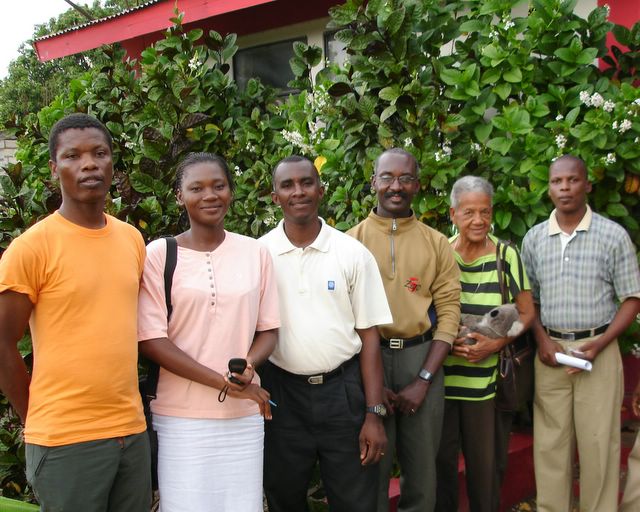
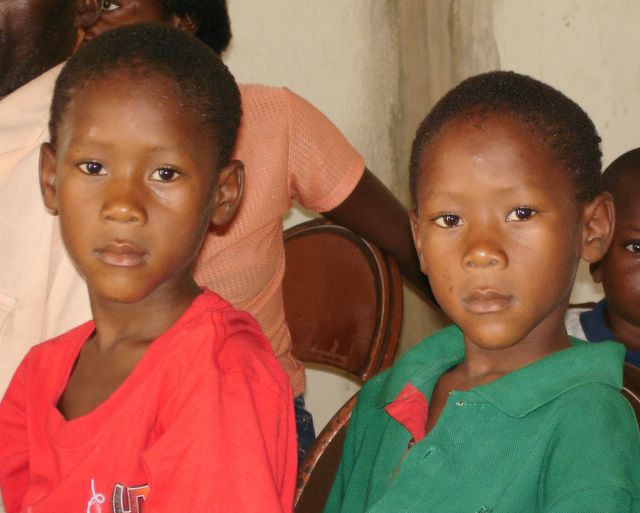
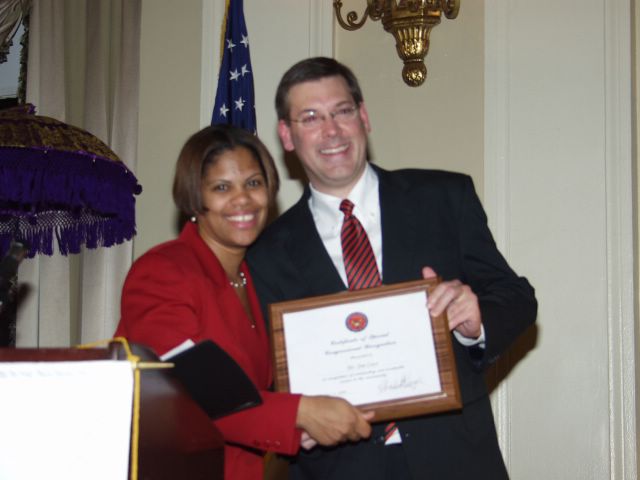
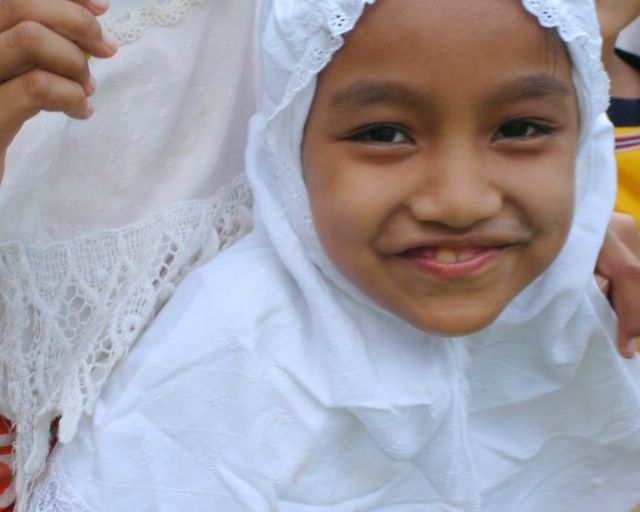


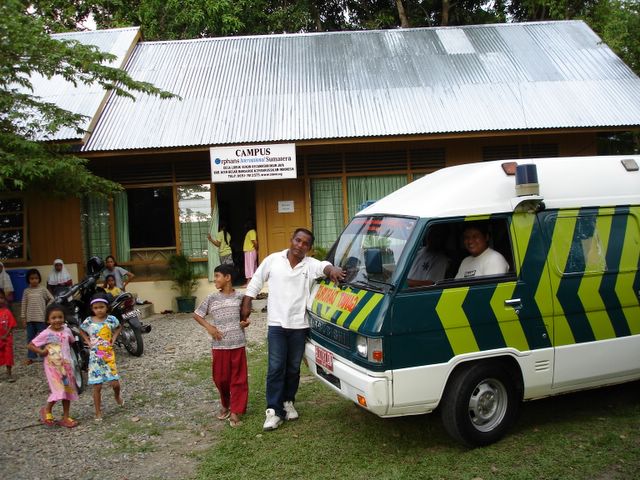
Sunday, September 04, 2005
Indonesian Tsunami Docs to Assist in Gulf
TSUNAMI MEDICAL TEAM WANTS TO GIVE BACK
Indonesian Tsunami Docs to Assist in Gulf
These Indonesian physicians will be coordinated by American doctors affiliated with Orphans International America, based in
Orphans International is currently determining where their services would be best utilized and believe they would be deployed to southern Louisiana and be able to tolerate primitive living conditions, such as they encountered in Aceh.
According to the Center for Disease Control, natural disasters contribute to the spread of many serious water-borne diseases, especially since water supplies and sewage systems have been disrupted. Diarrheal diseases, due to bacteria, parasites or hepatitis A can occur. Because of the tremendous loss of life, serious injuries, missing and separated families, and destruction of whole areas, our team recognizes the situation they encounter will have much in common with tsunami ravaged Aceh.
Last week, Orphans International Worldwide founder Jim Luce announced the establishment of a fund to cover transport, room, board and stipend to flood victim professionals who wish to volunteer for the next year assisting flood orphans in both Banda Aceh,
Orphans International America has received bi-partisan support from leaders such as former president Bill Clinton, Mayor Mike Bloomberg, Sen. Chuck Schumer, and Sen. Hillary Clinton, as well as many New York City-based public officials. Orphans International is a non-partisan, interfaith organization incorporated in
OI's mission is "Raising Global Citizens" and OI’s children remain in their native countries to become educated to their fullest potential and then help move their countries forward; they do not place children for adoption in
Donors who wish to support this effort may write info@oiww.org for additional information. More detailed information is available on OI's website, www.oiww.org; the organization's monthly e-newsletter is available on-line. Tax-deductible contributions to the OI Fund for
– 30 –
Subscribe to:
Posts (Atom)